
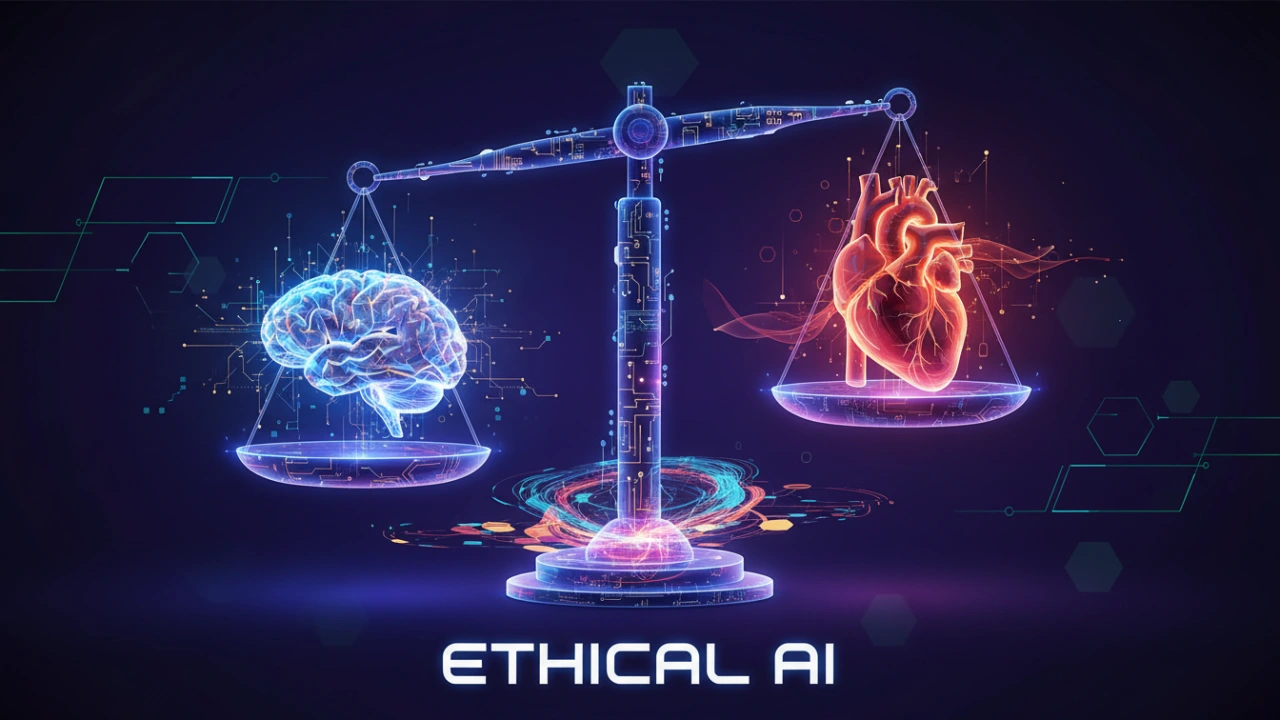

A recent study found that 73% of consumers are concerned about how AI uses their personal data (industry estimate), yet 60% also expect hyper-personalized experiences. (industry estimate) This tension immediately highlights the core challenge in the ethics of AI agents in marketing. As AI agents become more sophisticated, automating everything from content generation to customer interaction, the line between effective personalization and unwelcome manipulation blurs.
This article focuses on building a sustainable, trust-based marketing future. It examines critical ethical considerations, from data privacy to algorithmic bias, and provides actionable frameworks for responsible deployment. You will learn how to navigate this complex landscape, protect your brand's reputation, and foster genuine customer loyalty, ensuring your AI initiatives are both powerful and principled.
Industry Benchmarks
Data-Driven Insights on Ethics Of Ai Agents In Marketing
Organizations implementing Ethics Of Ai Agents In Marketing report significant ROI improvements. Structured approaches reduce operational friction and accelerate time-to-value across all business sizes.
Navigating the Ethics of AI Agents in Marketing: Transparency and Explainability
A pressing concern regarding AI agents is the "black box" problem. This refers to the difficulty in understanding how an AI system arrives at a particular decision or recommendation. When AI agents are deployed in marketing, making choices about who sees which ad, what content is generated, or how customer service interactions proceed, their opaque nature can erode trust and lead to unintended consequences. This lack of clarity directly impacts consumer perception and the overall ethics of AI agents in marketing.
Key Insight
A 2023 IBM study revealed that 68% of consumers believe it is important for companies to explain how their AI systems make decisions. Consider an AI agent that recommends products to a customer. If the customer buys a product based on the recommendation but does not understand why it was suggested, they might feel manipulated rather than helped.
For instance, Amazon's product recommendation engine, while highly effective, is not transparent about its exact algorithmic logic. While some of this is proprietary, a complete lack of insight can be problematic. Explainable AI (XAI) addresses this by making AI outputs more understandable to humans, providing insights into the factors that influenced a decision. This approach significantly improves the ethics of AI agents in marketing by fostering trust.
The objective is to provide sufficient clarity, not to expose every line of code. For example, a travel booking AI could explain, "We recommended this hotel because it is within your stated budget, has a 4.5-star rating, and is close to the landmarks you viewed last week." This level of explanation transforms an opaque suggestion into a helpful, trust-building interaction. It shifts the perception from an AI making arbitrary choices to one making informed, relevant suggestions based on known parameters, upholding the ethics of AI agents in marketing.
Why This Matters
Ethics Of Ai Agents In Marketing directly impacts efficiency and bottom-line growth. Getting this right separates market leaders from the rest — and that gap is widening every quarter.
Ethics Of Ai Agents In Marketing: Bias and Fairness: Ensuring Equitable AI Marketing
AI agents learn from data. If that data reflects existing societal biases, the AI will perpetuate and amplify them. This presents a critical ethical challenge for marketers, as biased AI can lead to discriminatory targeting, unfair content delivery, and exclusion of certain demographics.
Research from the AI Now Institute highlights how biased training data can lead to discriminatory outcomes, with one study showing facial recognition software misidentifying women of color 35% more often than white men. While this example is from facial recognition, the principle applies directly to marketing: if your AI is trained on imbalanced data, its marketing outputs will be imbalanced too. Understanding and mitigating these biases is a key aspect of the ethics of AI agents in marketing.
A stark example of this occurred with Amazon's experimental recruiting tool, which was scrapped after it was found to be biased against women. The AI had been trained on a decade of hiring data, which predominantly came from men in tech roles, leading it to penalize resumes containing words associated with women. In marketing, this could manifest as an AI agent consistently showing high-value product ads only to certain demographics, or generating marketing copy that alienates specific groups of customers. Such outcomes directly contradict the principles of the ethics of AI agents in marketing.
Ensuring fairness requires proactive measures. This involves auditing the data used to train AI agents and continually monitoring their outputs for disparate impact across different customer segments. It is about designing systems that are equitable by default, rather than trying to fix bias after it has caused harm. A truly ethical AI marketing strategy demands a commitment to diversity in data and design, reflecting the core principles of the ethics of AI agents in marketing.
Ethics Of Ai Agents In Marketing: Data Privacy and Security: the Bedrock of Responsible AI Agents
“The organizations that treat Ethics Of Ai Agents In Marketing as a strategic discipline — not a one-time project — consistently outperform their peers.”
— Industry Analysis, 2026
Data privacy forms the core of consumer trust. AI agents naturally thrive on data – personal preferences, browsing history, purchase patterns, and more. How this data is collected, stored, processed, and used raises significant ethical and legal questions, directly impacting the ethics of AI agents in marketing. The average cost of a data breach in 2023 was $4.45 million, a 15% increase over three years, underscoring the financial and reputational risks of lax data security.
Consider the implications of an AI agent collecting highly granular data about customer behavior across multiple platforms without explicit, informed consent. While this data might enable hyper-personalized campaigns, it also creates a massive vulnerability.
Need expert guidance on Ethics Of Ai Agents In Marketing?
Join 500+ businesses already getting results.
Companies like Apple have made privacy a core differentiator, implementing features like App Tracking Transparency that require user permission for data collection, setting a high bar for others. Ignoring these privacy expectations can lead to regulatory fines, loss of customer loyalty, and severe brand damage.
Developing responsible AI agents requires a "privacy by design" approach. This means integrating privacy considerations from the very beginning of an AI agent's development, rather than as an afterthought. It involves data minimization (collecting only what is necessary), robust encryption, anonymization techniques, and clear, understandable consent mechanisms. This commitment is fundamental to the ethics of AI agents in marketing, ensuring customers feel in control of their data, not like it is being harvested without their knowledge.
Manipulation Vs. Personalization: Respecting Consumer Autonomy With AI Agents
AI agents excel at personalization, adapting experiences for individual users. However, a fine line exists between helpful personalization and manipulative persuasion. When AI agents use psychological insights to subtly influence behavior in ways that are not in the user's best interest, or exploit cognitive biases, this becomes unethical.
A 2022 survey by Edelman found that 59% of consumers feel brands are using their data in ways that cross the line from helpful to creepy. Navigating this delicate balance is a central tenet of the ethics of AI agents in marketing.
Consider "dark patterns" in user interfaces, which are often AI-driven. These are design choices that trick users into doing things they might not otherwise do, such as signing up for recurring subscriptions or sharing more data than intended.
For example, an AI agent might present a default option that benefits the company, making it difficult for the user to select an alternative. In contrast, genuine personalization provides value by simplifying choices, offering relevant information, or enhancing the user experience, always with the user's explicit or implicit consent and benefit in mind.
Respecting consumer autonomy means empowering choice, not restricting it. It means using AI to anticipate needs and offer solutions, rather than to exploit vulnerabilities or create artificial urgency. The purpose of AI in marketing should never be to trick or coerce, but to genuinely assist. Adhering to these principles is vital for the ethics of AI agents in marketing.
Accountability and Governance: Who is Responsible for AI Agent Actions?
As AI agents gain more autonomy, accountability becomes paramount. If an AI agent makes a mistake, generates harmful content, or inadvertently discriminates, who is responsible? Addressing this question is crucial for the ethics of AI agents in marketing. The absence of clear frameworks for this represents a significant gap: only 35% of organizations have a clear framework for AI ethics governance, according to a 2023 Deloitte report.
Consider a scenario where an AI-driven chatbot provides incorrect legal or medical advice, leading to real-world harm. While a human agent would be held accountable, the chain of responsibility for an AI agent is far less clear. This ambiguity can lead to a lack of oversight and a reluctance to address ethical failings proactively.
Companies like Google have faced scrutiny for AI-generated content that was factually incorrect or biased, highlighting the need for robust internal governance.
Establishing Governance for the Ethics of AI Agents in Marketing
Establishing clear lines of responsibility and robust governance structures is vital for ethical AI marketing. This includes developing internal AI ethics policies, assigning specific roles for oversight and auditing, and creating a mechanism for identifying and rectifying AI-related harms. It also means conducting regular AI impact assessments to anticipate potential ethical risks before deployment and throughout the agent's lifecycle. Such frameworks are indispensable for the ethics of AI agents in marketing, ensuring the promise of AI does not turn into a liability.
Building Trust: the Core of Sustainable AI Agents in Marketing
All ethical considerations for AI agents in marketing ultimately converge on one critical outcome: building and maintaining consumer trust. Without trust, even the most innovative AI tools will fail to deliver long-term value. Consumers are increasingly discerning, and their willingness to engage with AI-driven marketing hinges on their belief that brands are acting responsibly.
Brands with high trust scores see a 2.5x higher purchase intent among consumers, demonstrating a clear link between trust and commercial success. This makes trust a cornerstone of the ethics of AI agents in marketing.
Trust is earned through consistent, transparent, and ethical behavior; it does not build overnight. Patagonia, for example, has built immense trust through its commitment to environmental responsibility and supply chain transparency, which extends to how they communicate with customers.
Applying this principle to AI involves being open about AI's role in marketing, providing options for customers to manage their data and preferences, and consistently demonstrating that AI agents are designed to serve, not exploit.
A commitment to trust requires continuous effort. It means staying informed about evolving ethical standards, engaging in open dialogue with customers about their AI concerns, and being prepared to adapt your AI strategies as societal expectations shift. By prioritizing trust, you transform AI agents from mere tools into powerful enablers of genuine customer relationships, ensuring your marketing efforts are both effective and enduring. These actions reinforce the ethics of AI agents in marketing, marking the hallmark of truly responsible AI agents.
Frequently Asked Questions
What are AI agents in marketing?
AI agents in marketing are autonomous or semi-autonomous software programs that use artificial intelligence to perform marketing tasks, such as generating content, personalizing customer experiences, automating customer service, or optimizing ad campaigns.
Why are the ethics of AI agents in marketing important?
Ethical considerations are crucial because AI agents process sensitive customer data, make decisions that impact consumer experiences, and can potentially perpetuate biases or engage in manipulative practices, all of which can erode trust and harm brand reputation.
How can I ensure my AI agents are transparent?
To ensure transparency, clearly inform customers when they are interacting with an AI, provide understandable explanations for AI-driven recommendations, and be open about the types of data your AI agents use and why.
What is algorithmic bias in AI marketing?
Algorithmic bias occurs when an AI agent's decisions or outputs are unfairly prejudiced against certain groups, often due to biased training data that reflects existing societal inequalities. This can lead to discriminatory targeting or content.
How do data privacy regulations affect AI agents?
Regulations like GDPR and CCPA mandate strict rules for data collection, storage, and processing. AI agents must be designed to comply with these laws, ensuring explicit consent, data minimization, and robust security measures to protect consumer data.
What's the difference between personalization and manipulation by AI?
Personalization uses AI to offer relevant, helpful, and desired experiences based on user preferences. Manipulation, conversely, uses AI to exploit psychological vulnerabilities or trick users into actions that primarily benefit the company, often without their full awareness or consent.
Who is accountable when an AI agent makes a mistake?
Accountability for AI agent mistakes typically rests with the organization deploying the AI. Establishing clear internal governance, ethics policies, and oversight roles is essential to define responsibility and ensure mechanisms for redress.
Can AI agents help build customer trust?
Yes, when developed and deployed ethically, AI agents can build trust by providing highly relevant, efficient, and respectful customer experiences. Transparency, fairness, and a commitment to privacy are key to leveraging AI for trust-building.
What is "privacy by design" for AI agents?
"Privacy by design" is an approach where privacy considerations are integrated into the fundamental architecture and design of AI agents from the very outset, rather than being added as an afterthought. This ensures privacy is a core function, not an optional extra.
How can I stay updated on AI ethics best practices?
Stay informed by following reputable AI ethics organizations, engaging with industry thought leaders, participating in professional development, and regularly reviewing your internal policies against evolving global standards and consumer expectations.
Conclusion
The exploration of the ethics of AI agents in marketing reveals a landscape rich with opportunity, yet fraught with potential pitfalls. The core insight is that the most powerful AI is not just the smartest, but the most responsible. Prioritizing transparency, actively mitigating bias, safeguarding data privacy, respecting consumer autonomy, and establishing clear accountability helps avoid risks and actively builds a stronger, more trusted brand.
The future of marketing is AI-driven, and its success depends on our collective commitment to ethical deployment. Embrace these principles, and your AI agents will become powerful allies in fostering genuine customer relationships and achieving sustainable growth. If you are looking to develop or audit your AI marketing strategies with an unwavering commitment to ethical principles, consider consulting with experts who can guide your team through this complex but rewarding terrain, ensuring you uphold the highest ethics of AI agents in marketing.
Leave a Reply