
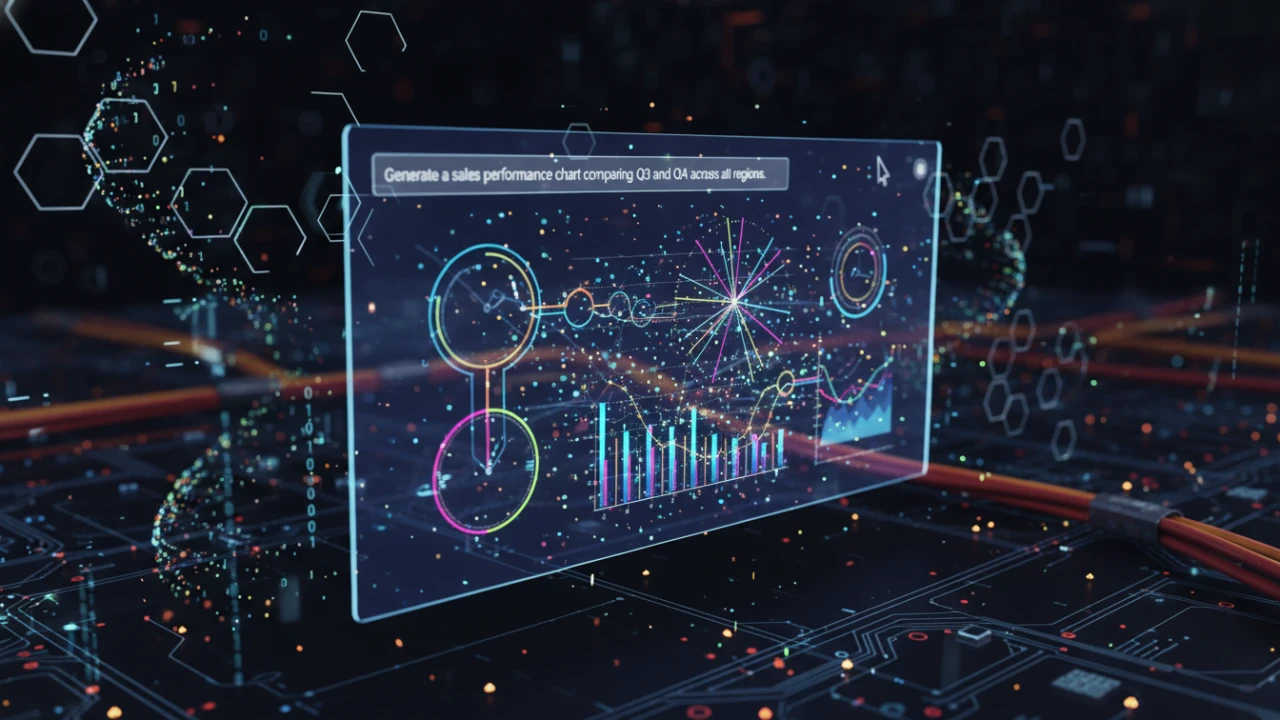

What if you could just ask your data questions instead of building complex pivot tables? Welcome to the future of AI dashboards for marketing. For marketing operations specialists, agency owners, and marketing managers, the promise of AI-powered insights isn't just about efficiency; it's about making smarter, faster decisions that directly impact ROI.
Key Insight
Traditional marketing dashboards, while useful, often require significant manual effort to set up, maintain, and interpret. They show you what happened, but rarely why, or what will happen next. AI dashboards for marketing move beyond static reports, offering dynamic, predictive, and even prescriptive insights.
Imagine a system that not only tells you your conversion rate dropped but also identifies the specific ad creative, audience segment, or landing page causing the dip, and then suggests the optimal next step.
This article is your definitive guide to understanding, implementing, and maximizing the potential of AI dashboards in your marketing strategy. We'll explore how these intelligent systems automate reporting, answer complex questions in plain language, and even forecast future performance, freeing your team to focus on strategy and creativity rather than data wrangling.
Industry Benchmarks
Data-Driven Insights on Ai Dashboards For Marketing
Organizations implementing Ai Dashboards For Marketing report significant ROI improvements. Structured approaches reduce operational friction and accelerate time-to-value across all business sizes.
The Power of AI Dashboards for Marketing: Beyond Traditional Reporting
The distinction between a traditional marketing dashboard and an AI marketing dashboard is fundamental. A traditional dashboard, like a Google Analytics report or a custom Tableau visualization, presents historical data. It answers "what happened?" by displaying metrics such as website traffic, conversion rates, or campaign spend.
These dashboards are essential for monitoring performance, but their insights are often retrospective and require significant human analysis to translate into action.
AI marketing dashboards go several steps further. They incorporate machine learning algorithms to process vast datasets from disparate sources—CRM, ad platforms, social media, email marketing, and web analytics—and identify patterns, anomalies, and correlations that human analysts might miss.
For instance, an AI dashboard won't just show you a drop in ad performance; it might immediately flag that the drop correlates with a specific audience segment's declining engagement on Facebook, while a similar audience on Instagram is performing above average.
This capability moves beyond simple data presentation to offer genuine intelligence.
Consider the impact on decision-making speed. A study by Accenture found that companies that effectively use AI for data analysis can see a 30% increase in productivity. (industry estimate) For a marketing team, this means less time spent manually extracting and cross-referencing data, and more time acting on insights.
Instead of waiting for weekly reports, an AI dashboard can provide real-time alerts when a critical KPI deviates from its predicted path, allowing for immediate course correction. This proactive approach minimizes wasted ad spend and capitalizes on emerging opportunities much faster.
For example, a traditional dashboard might show that your cost-per-acquisition (CPA) increased by 15% last month. An AI marketing dashboard could tell you that the increase is primarily driven by underperforming keywords in your Google Ads campaigns targeting users over 45, and simultaneously suggest reallocating budget to your LinkedIn campaigns, which are currently showing a 22% lower CPA for a similar audience.
This level of granular, actionable insight is what sets AI dashboards apart.
Automated Marketing Reporting: The Core of AI Dashboards for Marketing
One of the immediate and most impactful benefits of AI dashboards for marketing is the automation of reporting. Marketing teams spend an inordinate amount of time on repetitive tasks: pulling data from various platforms, cleaning it, consolidating it into spreadsheets, creating charts, and writing summaries.
This process is not only time-consuming but also prone to human error, and by the time the report is generated, the data might already be outdated.
AI-powered automation streamlines this entire workflow. These dashboards connect directly to your marketing platforms—Google Ads, Facebook Ads Manager, HubSpot, Salesforce Marketing Cloud, Google Analytics 4, and more—and automatically extract, transform, and load data into a centralized system.
Machine learning algorithms then process this data, ensuring consistency and accuracy, and generate predefined reports or custom visualizations on demand. This means marketing operations teams can reclaim hours previously spent on manual reporting, redirecting that effort towards strategic planning and campaign optimization.
Research indicates that marketing teams can reduce the time spent on reporting by up to 70% through automation. Imagine an agency owner who previously allocated 10-15 hours per week per client to compile performance reports. With an AI dashboard, that time investment shrinks dramatically, allowing account managers to focus on client strategy, creative development, and relationship building.
This efficiency gain directly translates into higher profitability and the capacity to serve more clients without scaling up headcount proportionally.
A concrete example: consider a global brand running campaigns across 15 different countries, each with its own ad accounts, local social media pages, and CRM instances. Manually consolidating performance data across all these channels and regions for a quarterly review would be a monumental task, potentially taking weeks.
An AI dashboard can ingest all this data daily, identify top-performing regions and campaigns, highlight underperforming assets, and present a consolidated, interactive report within minutes. It can even translate key insights into different languages for local teams.
Why This Matters
Ai Dashboards For Marketing directly impacts efficiency and bottom-line growth. Getting this right separates market leaders from the rest — and that gap is widening every quarter.
Ai Dashboards For Marketing: Natural Language BI: Your Marketing Data, Conversational
One of the most exciting advancements within AI dashboards is Natural Language Business Intelligence (NLBI). This capability allows users to interact with their marketing data using plain, conversational language, eliminating the need for complex queries, SQL knowledge, or even deep familiarity with the dashboard's interface.
Instead of clicking through menus or building intricate filters, you can simply ask a question, just as you would ask a colleague.
For marketing managers who aren't data scientists, NLBI democratizes access to insights. It removes the technical barrier that often prevents non-technical users from fully exploring their data. Imagine being able to ask your dashboard, "Show me the conversion rate for all email campaigns sent in October to customers in California," or "Which landing page had the highest bounce rate for mobile users last quarter?" The AI processes these natural language inputs, translates them into data queries, and presents the relevant charts, graphs, or tables instantly.
This immediate access to specific answers significantly speeds up the decision-making cycle. Instead of waiting for a data analyst to pull a custom report, a marketing manager can get real-time answers during a strategy meeting. This agility is crucial in fast-moving markets where opportunities can be fleeting.
Need expert guidance on Ai Dashboards For Marketing?
Join 500+ businesses already getting results.
A survey by Gartner predicted that by 2025, 50% of analytical queries will be generated through natural language, highlighting the growing importance of this capability.
For instance, a marketing operations specialist might need to quickly understand the performance of a specific product launch across multiple channels. With NLBI, they could ask, "What was the ROI for 'Product X' launch campaigns across Google Ads, Facebook, and email in Q2?" The dashboard would then aggregate data from these disparate sources, calculate the ROI based on predefined metrics, and present a clear, concise answer, perhaps even breaking it down by channel or audience segment.
This eliminates the need to manually combine data from different platforms and perform calculations in spreadsheets.
Ai Dashboards For Marketing: Marketing KPI Forecasting: Predictive Insights for Strategic Growth
“The organizations that treat Ai Dashboards For Marketing as a strategic discipline — not a one-time project — consistently outperform their peers.”
— Industry Analysis, 2026
Beyond understanding past performance and current trends, AI dashboards for marketing offer a powerful capability: marketing KPI forecasting. By applying advanced machine learning models to historical data, these dashboards can predict future outcomes for key performance indicators (KPIs) like lead generation, conversion rates, customer lifetime value, and even ad spend efficiency.
This predictive power moves marketing from reactive to proactive, enabling more strategic planning and resource allocation.
Traditional forecasting often relies on simple trend analysis or linear projections, which can be easily disrupted by market shifts, seasonality, or external factors. AI-driven forecasting, however, considers a multitude of variables, including historical performance, seasonality, economic indicators, competitor activity, and even sentiment analysis from social media.
It can identify complex, non-linear relationships within your data to generate more accurate predictions. For example, an AI model might predict a 10% increase in MQLs next quarter, but only if your blog content output increases by 20% and your retargeting budget remains constant.
The accuracy of AI forecasting can significantly impact budget allocation and campaign strategy. Studies suggest that AI-powered forecasting can improve prediction accuracy by 15-20% compared to traditional methods. This means less wasted budget on campaigns based on flawed assumptions and more precise targeting of resources towards initiatives with the highest predicted ROI.
For an agency owner, this translates directly into more successful client campaigns and stronger client retention.
Consider a marketing manager planning their budget for the next fiscal year. Instead of relying on gut feeling or simple year-over-year comparisons, an AI dashboard can forecast the expected number of conversions from various channels, project the necessary ad spend to hit specific targets, and even identify potential bottlenecks.
For instance, it might predict that to achieve a 25% increase in sales, you'll need to increase your top-of-funnel content production by 30% and allocate an additional $50,000 to paid social media campaigns in Q3 to meet the predicted demand.
This level of detail provides a solid, data-backed foundation for strategic decisions.
Building Your AI Marketing Dashboard: a Practical Roadmap
Implementing an AI marketing dashboard isn't a one-time project; it's a strategic evolution of your data infrastructure. The process involves several key stages, from defining your needs to selecting the right tools and ensuring continuous optimization. A structured approach ensures you build a system that truly serves your marketing objectives.
The first step is to define your core marketing KPIs and the questions you need answered. What metrics are absolutely critical for your team and stakeholders? What decisions do you need to make faster or with greater confidence? This clarity will guide your data integration strategy.
For instance, if customer lifetime value (CLTV) is a key metric, you'll need to integrate CRM data, transaction history, and potentially customer service interactions.
Next, assess your existing data sources. Where does your marketing data currently reside? Google Analytics, Facebook Ads, LinkedIn Ads, HubSpot, Salesforce, email platforms, your website's CMS, and even offline sales data are all potential inputs.
The challenge often lies in integrating these disparate sources into a unified data lake or warehouse. This unification is critical because AI models perform best when they have access to a comprehensive view of your marketing ecosystem. Poor data quality at this stage can severely limit the effectiveness of any AI insights.
Selecting the right AI dashboard solution involves evaluating various platforms. Options range from robust business intelligence tools like Tableau or Power BI with AI extensions, to specialized AI marketing analytics platforms, or even custom-built solutions.
Consider factors like ease of integration with your existing stack, natural language processing capabilities, predictive modeling features, visualization options, and scalability. Many platforms offer free trials, allowing you to test their capabilities with your own data before committing.
For example, a marketing operations team at an e-commerce company might choose a platform that seamlessly integrates with Shopify, Google Analytics 4, and their email marketing provider. They would then define custom dashboards to monitor daily sales, identify product trends, forecast inventory needs based on predicted demand, and track the ROI of specific promotions in real-time.
This setup allows them to quickly reallocate ad spend to top-performing products or pause campaigns for items nearing stockout, preventing lost revenue.
Advanced Capabilities and Future Trends in AI Marketing Dashboards
The evolution of AI dashboards for marketing is rapid, with new capabilities constantly emerging. Beyond automated reporting and basic forecasting, these platforms are moving towards more sophisticated functions that promise even greater strategic advantages.
Understanding these advanced features and future trends is crucial for marketing leaders looking to stay ahead.
One significant area of advancement is **prescriptive analytics**. While predictive analytics tells you what is likely to happen, prescriptive analytics goes further by recommending specific actions to achieve desired outcomes or mitigate risks.
For instance, an AI dashboard might not just predict a decline in lead quality; it could suggest specific adjustments to your ad targeting parameters, recommend new keyword sets, or even advise on A/B test variations for landing pages to reverse the trend.
This capability moves AI from an insight generator to a strategic advisor.
Another trend is the integration of **real-time optimization**. Imagine an AI dashboard continuously monitoring your live campaigns, identifying underperforming ads or audience segments, and automatically making small, iterative adjustments to bids, budgets, or creative rotations to maximize ROI.
This level of optimization, while still requiring human oversight, significantly reduces the manual effort involved in campaign management and ensures budgets are always working as hard as possible. The global AI in marketing market is projected to grow from $12.7 billion in 2023 to $74.5 billion by 2030, underscoring the rapid adoption of these advanced capabilities.
The future also holds deeper integration with **hyper-personalization engines** and **customer journey orchestration platforms**. AI dashboards will not only report on individual customer behavior but will also feed insights directly into systems that deliver personalized content, offers, and experiences across every touchpoint.
This creates a seamless, data-driven customer journey that adapts in real-time based on AI-derived understanding of individual preferences and intent.
For example, an advanced AI dashboard could detect a customer showing high intent for a specific product category based on their browsing history and search queries. It could then trigger a personalized email with relevant product recommendations, adjust the website's homepage content for that user, and even prioritize their support inquiries if they reach out.
This level of integrated, intelligent marketing is where the true power of AI dashboards lies.
Frequently Asked Questions About AI Dashboards for Marketing
What is an AI dashboard for marketing?
An AI dashboard for marketing is a data visualization tool that uses artificial intelligence and machine learning to automate data collection, analyze complex patterns, provide predictive insights, and sometimes even suggest actions, moving beyond static historical reporting to offer dynamic, intelligent marketing intelligence.
How do AI marketing dashboards differ from traditional dashboards?
Traditional dashboards primarily display historical data and require manual interpretation. AI marketing dashboards, in contrast, automate data integration, use algorithms to find hidden patterns, offer predictive forecasts, and can answer questions using natural language, providing deeper, more actionable insights without extensive human analysis.
What are the main benefits of using AI dashboards for marketing?
Key benefits include significant time savings through automated reporting, improved decision-making speed, more accurate marketing KPI forecasting, the ability to ask data questions in plain language (Natural Language BI), and ultimately, a higher return on marketing investment due to optimized strategies.
What kind of data do AI dashboards use?
AI dashboards integrate data from a wide array of marketing sources, including web analytics (e.g., Google Analytics), ad platforms (e.g., Google Ads, Facebook Ads), CRM systems (e.g., Salesforce, HubSpot), email marketing platforms, social media, and even offline sales data, to create a holistic view.
Can AI dashboards help with marketing budget allocation?
Yes, these dashboards can help. By providing accurate marketing KPI forecasting and identifying which campaigns or channels are most likely to achieve specific goals, AI dashboards can recommend optimal budget allocations to maximize ROI and ensure resources are directed to the most effective initiatives.
Is natural language processing (NLP) a common feature in AI marketing dashboards?
Yes, Natural Language Processing (NLP) is an increasingly common and valuable feature. It allows users to query their marketing data using conversational language, making data analysis accessible to non-technical team members and speeding up the process of getting specific answers.
What are some challenges in implementing AI marketing dashboards?
Common challenges include ensuring data quality and integration across disparate systems, selecting the right platform for your specific needs, the initial setup and configuration, and ensuring your team is trained to effectively interpret and act on the AI-generated insights.
How do AI dashboards help with real-time campaign optimization?
AI dashboards can monitor live campaign performance against predicted outcomes, identify anomalies or underperforming elements in real-time, and in some advanced cases, even suggest or automatically implement adjustments to bids, budgets, or creative to maintain optimal performance and prevent wasted spend.
Conclusion: the Intelligent Future of Marketing Measurement
The era of static, retrospective marketing reports is rapidly fading. AI dashboards for marketing represent a fundamental shift in how marketing teams understand, measure, and optimize their efforts. By automating tedious data tasks, offering predictive insights, and enabling natural language interaction with complex datasets, these intelligent systems empower marketing operations, agency owners, and marketing managers to move beyond mere reporting into true strategic foresight.
The single most important takeaway is this: AI dashboards don't just show you what happened; they help you understand why, predict what will happen next, and even suggest what you should do about it. This capability transforms marketing from a reactive function into a proactive, data-driven engine for growth.
Embracing this technology isn't about replacing human intuition, but augmenting it with unparalleled analytical power and speed.
The future of marketing measurement is intelligent, automated, and deeply integrated. By taking the practical steps outlined—defining your KPIs, integrating your data, and selecting the right AI solution—you can unlock a new level of efficiency and effectiveness for your marketing efforts.
Don't just track your performance; predict it, optimize it, and achieve results you once thought impossible. It's time to Build your AI dashboard and step into the intelligent future of marketing.
Leave a Reply