

Key Metric
Data-Driven Insights on Rpa With Ai
Organizations implementing Rpa With Ai achieve up to a 3.5x ROI within 90 days. Structured frameworks cut operational friction by up to 40%.
Elevating Enterprise Efficiency: the Strategic Imperative of RPA With AI
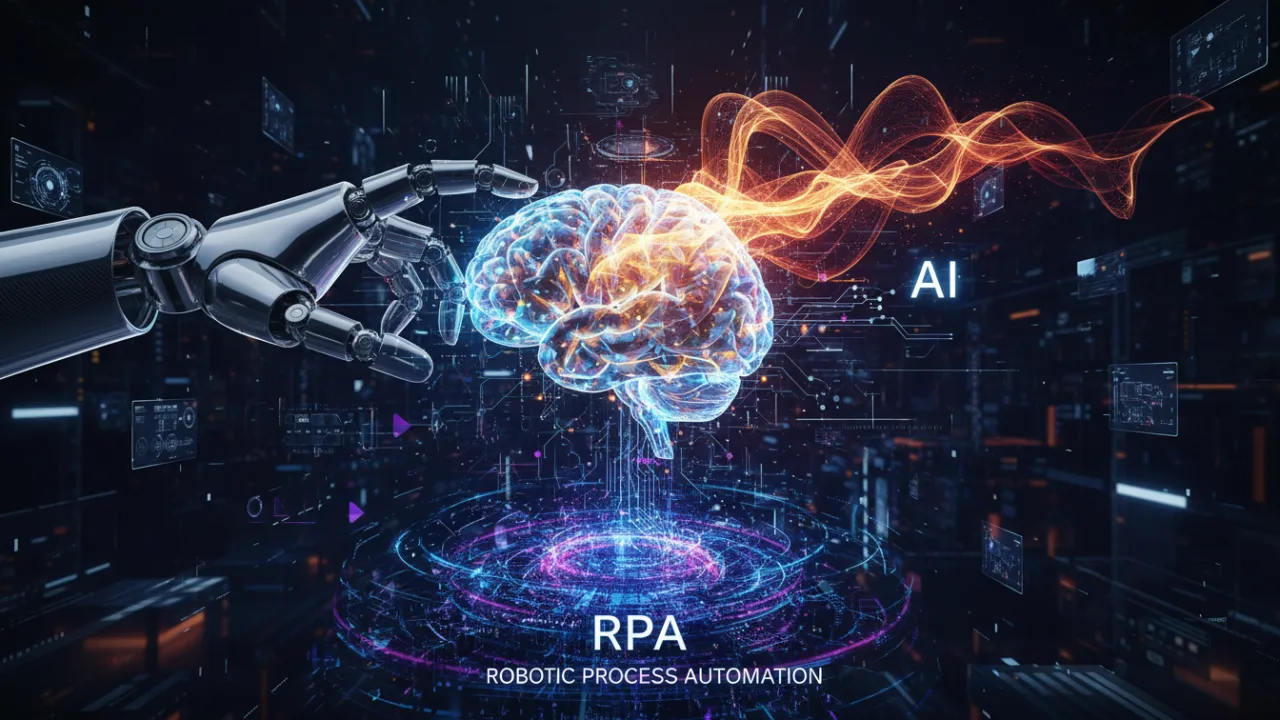
Current projections indicate that by 2025, over 70% of organizations will adopt Robotic Process Automation (RPA) (industry estimate). However, many will struggle to scale without integrating advanced intelligence. This article examines RPA with AI, exploring how this combination extends traditional automation limits.
It enables enterprises to achieve greater operational agility and data-driven decision-making.
We will dissect the technical frameworks, strategic implications, and tangible benefits of embedding artificial intelligence capabilities directly into RPA workflows. For IT Directors and Automation Engineers, understanding this evolution is a foundational requirement for building resilient, future-proof automation ecosystems.
Integrating AI components transforms static bots into dynamic, adaptive agents capable of handling unstructured data, complex decision trees, and continuous learning. This opens new possibilities in enterprise automation beyond mere task replication.
The Convergence of RPA With AI: Defining Intelligent Process Automation
The evolution from basic Robotic Process Automation to intelligent process automation marks a key shift in enterprise efficiency. Traditional RPA automates repetitive, rule-based tasks within structured data environments. However, its limits appear when encountering variability, unstructured data, or processes needing human-like judgment.
This is where the integration of RPA with AI becomes essential, leading to Intelligent Process Automation (IPA). IPA combines RPA’s execution capabilities with AI technologies such as Machine Learning (ML), Natural Language Processing (NLP), Computer Vision (CV), and predictive analytics.
This combination allows automation solutions to interpret context, learn from data, and adapt to changing conditions, extending automation beyond simple, predictable tasks.
A core aspect of intelligent process automation is its ability to handle exceptions autonomously. While a standard RPA bot might halt upon encountering an unexpected data format, an AI-enhanced bot can use ML algorithms to classify the anomaly, apply learned rules, or escalate the issue intelligently based on predefined parameters.
This reduces manual intervention, improving process throughput and cutting operational costs.
Industry reports indicate that IPA initiatives can reduce processing times by up to 60% (industry estimate) and improve data accuracy by over 90% in complex workflows (industry estimate).
This creates a more resilient and versatile automation fabric that scales to meet dynamic business demands without constant human oversight for every deviation. Understanding the foundational elements of RPA with AI is crucial for architecting robust automation strategies.
Understanding the Core Components of RPA with AI
The relationship between RPA and AI relies on several key technological components. Machine Learning algorithms enable bots to learn from historical data, identify patterns, and make predictions. This supports tasks like fraud detection, customer sentiment analysis, and dynamic resource allocation.
Natural Language Processing allows bots to understand, interpret, and generate human language, automating tasks involving emails, customer service interactions, and document processing. Computer Vision enables bots to “see” and interpret visual data, such as images, PDFs, and scanned documents, extracting relevant information even from unstructured formats.
These AI capabilities are deeply embedded, allowing the RPA bot to act as the orchestrator, executing tasks based on the intelligence provided by the AI components. For instance, an RPA bot might use NLP to read an invoice, CV to extract line items, and ML to validate against a purchase order, all within a single automated workflow.
This integrated approach defines the effectiveness of modern RPA with AI solutions.
Rpa With Ai: Unlocking Advanced Automation With Cognitive RPA and AI
Cognitive RPA describes the transformation that occurs when Artificial Intelligence gives Robotic Process Automation human-like cognitive abilities. This evolution moves beyond mere task execution to encompass understanding, reasoning, and learning within automated processes. Cognitive RPA systems interact with unstructured data, interpret complex scenarios, and make informed decisions, tasks traditionally for human intellect.
For instance, a cognitive RPA bot can analyze customer feedback from various channels, identify recurring issues, and suggest proactive solutions, a capability beyond conventional RPA. This advanced automation broadens the spectrum of processes that can be automated, especially complex ones needing nuanced judgment and contextual understanding.
Strategic deployment of cognitive RPA enables organizations to automate entire end-to-end processes previously considered too intricate for digital workers.
A primary advantage of cognitive RPA is its capacity for continuous improvement. Through machine learning, these systems refine their decision-making models over time, adapting to new data and evolving business rules without constant reprogramming. This self-optimization is important in dynamic business environments where processes and data patterns frequently change.
For example, in financial services, a cognitive RPA solution can process loan applications, cross-reference data, assess risk profiles using predictive analytics, and flag suspicious activities with high accuracy. It also learns from each transaction to improve future performance.
This autonomy and adaptability lead to enhanced operational efficiency, reduced error rates, and a competitive edge. Integrating AI components into RPA frameworks is about intelligent, adaptive execution.
Data-Driven Advantages of RPA with AI Implementations
Implementing RPA with AI yields many data-driven advantages that directly impact an organization’s bottom line and strategic positioning. Firstly, it improves data accuracy and consistency. By automating data extraction, validation, and entry across disparate systems, the risk of human error is reduced, leading to cleaner, more reliable datasets.
This enhanced data quality is foundational for robust analytics and informed decision-making. Secondly, AI-enhanced RPA provides superior insights through advanced analytics. Bots collect, process, and analyze vast quantities of operational data, identifying bottlenecks, inefficiencies, and opportunities for process optimization.
This granular visibility into process performance allows for continuous refinement and strategic adjustments.
Furthermore, predictive capabilities from machine learning within RPA with AI allow businesses to anticipate future trends and proactively address potential issues. In supply chain management, AI-enhanced bots analyze historical demand patterns, current inventory levels, and external factors to predict future demand with greater precision, optimizing stock levels and minimizing waste.
This proactive approach minimizes reactive problem-solving and fosters a more agile operational model. Organizations deploying RPA with AI report an average reduction in operational costs of 20-30% within the first year. This is largely due to these data-driven efficiencies and the ability to reallocate human capital to higher-value, strategic tasks.
The strategic need is clear: using AI within RPA is a fundamental shift towards data-centric, intelligent operations.
Navigating Implementation Complexities for RPA With AI
While the benefits of integrating RPA with AI are compelling, the implementation journey often involves complexities requiring meticulous planning and strategic foresight. One significant challenge is data readiness. AI models rely on high-quality, well-structured data.
Many organizations, however, deal with fragmented, inconsistent, or siloed data landscapes, which can hinder the training and effectiveness of AI components.
Addressing this requires a comprehensive data strategy, including data cleansing, standardization, and establishing robust data governance frameworks before or concurrently with automation deployment. Furthermore, selecting appropriate AI technologies for specific use cases demands deep technical expertise.
Not all AI algorithms suit every problem, and a mismatch can lead to suboptimal performance or failed initiatives. A thorough understanding of machine learning models, natural language processing capabilities, and computer vision applications is essential to tailor solutions effectively.
Another important complexity involves change management and organizational alignment. Introducing AI-enhanced RPA often necessitates significant shifts in existing workflows, job roles, and organizational structures. Resistance to change, lack of collaboration between IT and business units, and insufficient training can disrupt even technically sound implementations.
Successful adoption requires a clear communication strategy, stakeholder engagement from the outset, and comprehensive training programs to upskill employees and foster an automation culture. Without a well-defined change management plan, the full potential of RPA with AI remains unrealized.
Industry analysis indicates that projects with strong executive sponsorship and cross-functional teams are 1.5 times more likely to succeed in scaling intelligent automation initiatives, highlighting the importance of organizational buy-in beyond technical prowess.
Strategic Frameworks for Successful RPA with AI Adoption
To address implementation complexities and ensure successful adoption of RPA with AI, organizations must establish strong strategic frameworks. Firstly, a phased implementation approach is advisable. Starting with pilot projects in less critical areas allows teams to gain experience, refine processes, and demonstrate tangible value before scaling across the enterprise.
This iterative approach minimizes risk and builds internal confidence. Secondly, establishing a dedicated Center of Excellence (CoE) for intelligent automation is essential. A CoE provides centralized governance, best practices, technical expertise, and a knowledge repository, ensuring consistency and accelerating deployment cycles.
This team identifies automation opportunities, evaluates technologies, and oversees the entire lifecycle of RPA with AI solutions.
Thirdly, a strong emphasis on continuous monitoring and optimization is important. AI models require ongoing training and fine-tuning as data patterns evolve and business requirements change. Implementing effective monitoring tools and establishing clear performance metrics allows organizations to track the effectiveness of their AI-enhanced RPA solutions and make necessary adjustments.
This ongoing refinement ensures that automation continues to deliver maximum value over time. Finally, fostering a culture of continuous learning and collaboration between IT, business, and data science teams is key. This interdisciplinary approach ensures technical solutions align with business objectives and that insights from data scientists integrate into automation design.
By adhering to these strategic frameworks, organizations can navigate complexities and realize the full potential of RPA with AI.
Transformative Use Cases for RPA With AI
Integrating AI into RPA has significantly broadened the scope of automation, moving beyond back-office transactional processes. It now encompasses complex, front-office operations that directly impact customer experience and strategic decision-making. These AI-enhanced RPA solutions are changing industries by automating tasks requiring interpretation, judgment, and adaptation.
For instance, in customer service, AI-powered bots analyze incoming customer queries via email or chat, understand intent using NLP, and then use RPA to retrieve relevant information from CRM systems, process refunds, or initiate service requests, all without human intervention. This accelerates response times and ensures consistent, accurate service delivery, improving customer satisfaction.
The ability of RPA with AI to handle unstructured data like customer feedback or support tickets enables efficiencies previously impossible through traditional automation methods.
In the financial sector, AI-enhanced RPA improves compliance and fraud detection. Bots continuously monitor transactions, identify anomalies using machine learning algorithms, and flag suspicious activities for human review, significantly reducing the time and resources for regulatory adherence.
This proactive approach minimizes financial risk and strengthens security protocols.
Furthermore, in healthcare, AI-enabled RPA streamlines patient onboarding, appointment scheduling, and claims processing. Bots extract data from diverse medical documents, validate patient information, and update electronic health records, reducing administrative burden and allowing medical professionals to focus more on patient care.
These examples illustrate how RPA with AI redesigns processes for greater intelligence, speed, and accuracy across various operational domains, leading to significant improvements in efficiency and service quality.
Industry-Specific Applications of RPA with AI
The versatility of RPA with AI allows its application across many industries, each using its capabilities to address specific operational challenges. In banking, AI-enhanced RPA automates anti-money laundering (AML) checks by analyzing vast datasets for suspicious patterns.
It accelerates loan origination by processing applications and performing credit checks, and enhances customer onboarding by verifying identities and opening accounts swiftly.
These applications reduce manual effort and improve compliance accuracy. For manufacturing, AI with RPA optimizes supply chain management through predictive demand forecasting, automates quality control by analyzing visual data from production lines, and streamlines inventory management by predicting optimal stock levels, leading to reduced waste and improved operational flow.
The retail industry benefits from AI-driven RPA in personalizing customer experiences, automating order fulfillment and returns processing, and optimizing pricing strategies through market analysis. Bots analyze customer browsing behavior and purchase history to offer tailored recommendations, improving sales conversion rates.
In the legal sector, AI-enhanced RPA assists with document review, contract analysis, and e-discovery, significantly reducing the time and cost associated with these labor-intensive tasks. By automating the extraction of key clauses and identifying relevant information, legal professionals focus on strategic analysis rather than manual data sifting.
These diverse applications highlight the impact and adaptability of RPA with AI as a powerful technology, enabling organizations to achieve higher levels of operational excellence and competitive differentiation in their respective markets.
The Evolving Landscape: Future Trends in RPA With AI
The trajectory of RPA with AI continues to innovate, driven by advancements in artificial intelligence, cloud computing, and evolving business demands. The future landscape will see even deeper integration of AI capabilities, moving towards more autonomous and adaptive systems.
One key trend is the rise of hyperautomation, a concept that extends automation beyond individual tasks to orchestrate entire end-to-end business processes.
This uses a combination of RPA, AI, machine learning, process mining, and other advanced technologies. This holistic approach aims to automate as many business and IT processes as possible, creating a truly intelligent digital workforce that can self-optimize and adapt to dynamic operational environments.
The focus will shift from automating specific tasks to automating complex value streams, requiring sophisticated AI orchestration layers.
Another important trend is the increasing adoption of AI-driven process discovery and mining tools. These tools use AI algorithms to analyze system logs, user interactions, and event data to automatically map out existing business processes, identify bottlenecks, and pinpoint optimal automation candidates.
This reduces much of the manual effort traditionally involved in process analysis, accelerating the identification and deployment of high-impact RPA with AI solutions.
Furthermore, embedding AI directly into low-code/no-code platforms will make intelligent automation accessible, enabling citizen developers to build sophisticated AI-enhanced bots without extensive programming knowledge. This will accelerate the pace of automation adoption across organizations, promoting greater agility and innovation.
The future of RPA with AI is characterized by increased intelligence, autonomy, and accessibility, reshaping how businesses operate and innovate.
Predictive Analytics and Adaptive RPA with AI Systems
The future of RPA with AI is closely tied to advancements in predictive analytics and the development of truly adaptive systems. Predictive analytics, powered by advanced machine learning models, will enable RPA bots to anticipate future events and make proactive decisions.
For example, in IT operations, AI-enhanced bots could predict potential system failures based on historical data and real-time telemetry.
They could then automatically execute preventative maintenance or escalate issues before they impact service availability. This shift from reactive problem-solving to proactive intervention will enhance operational resilience and efficiency. The ability to forecast demand, identify risks, and optimize resource allocation will become a standard capability for intelligent automation solutions, moving beyond mere task execution to strategic operational management.
Moreover, adaptive RPA with AI systems will be able to learn and evolve continuously in response to changing environments and new data patterns. Unlike current systems that require periodic retraining, these future bots will use reinforcement learning and other advanced AI techniques to autonomously adjust their behavior, optimize workflows, and even discover new ways to complete tasks more efficiently.
This self-improving aspect will reduce the need for constant human oversight and intervention, allowing automation to scale with greater autonomy. Imagine bots that can not only execute tasks but also identify new automation opportunities, design their own workflows, and deploy them, all while adhering to governance rules.
This represents the peak of intelligent automation, where RPA with AI becomes a truly self-managing and self-optimizing operational force, driving continuous improvement and innovation across the enterprise.
Quantifying Value: Measuring ROI for RPA With AI Initiatives
Demonstrating a clear Return on Investment (ROI) is essential for securing executive buy-in and sustaining investment in RPA with AI initiatives. Measuring ROI for intelligent automation extends beyond simple cost savings from reduced manual labor; it encompasses a wider range of tangible and intangible benefits.
Tangible benefits include direct cost reductions in operational expenses, increased throughput, improved data accuracy leading to fewer errors and rework, and faster processing times. For instance, an AI-enhanced RPA deployment in invoice processing might reduce the average processing cost per invoice by 70% and accelerate payment cycles by several days, directly impacting cash flow.
Quantifying these metrics requires establishing clear baseline performance indicators before implementation and continuously tracking them post-deployment. Without strong measurement frameworks, the true value proposition of RPA with AI can be obscured.
Intangible benefits, while harder to quantify directly, often hold strategic value. These include improved customer satisfaction due to faster and more accurate service, better employee morale as mundane tasks are offloaded, enhanced compliance and reduced risk through automated checks, and increased business agility.
For example, an AI-driven customer service bot that resolves issues quickly and accurately contributes to brand loyalty and positive customer perception, which translates into long-term revenue growth.
While these benefits do not appear as direct line-item savings, they contribute significantly to an organization’s competitive advantage and overall market position. A comprehensive ROI analysis for RPA with AI must incorporate both direct financial gains and strategic advantages to present a complete picture of value creation.
This requires a collaborative effort between finance, operations, and IT teams to define relevant metrics and establish a consistent reporting mechanism.
Establishing Performance Benchmarks for RPA with AI Deployments
Establishing strong performance benchmarks is important for effectively measuring the success and ongoing value of RPA with AI deployments. These benchmarks should include both operational efficiency metrics and business impact metrics. Operational efficiency metrics include process cycle time reduction, error rate reduction, throughput capacity, and the percentage of automated tasks.
For example, a benchmark might aim for a 50% reduction in average claims processing time or a 95% reduction in data entry errors within the first six months of an AI-enhanced RPA deployment. These metrics provide a clear indication of how well the automation is performing at a functional level and its direct impact on operational output.
Business impact metrics, on the other hand, focus on the organizational outcomes. These can include cost savings, revenue growth, customer satisfaction scores (CSAT), employee retention rates, and compliance adherence. For instance, an AI-driven fraud detection system could be benchmarked against a target reduction in fraudulent transactions by a certain percentage, directly impacting financial losses.
It is important to align these benchmarks with overarching business objectives to ensure that automation efforts contribute to strategic goals. Regular reporting against these benchmarks allows organizations to track progress, identify areas for improvement, and demonstrate the ongoing value of their RPA with AI investments.
This data-driven approach ensures accountability and provides the necessary insights for continuous optimization and expansion of intelligent automation initiatives across the enterprise. Upgrade your RPA bots with AI capabilities to realize these measurable benefits.
Conclusion: the Strategic Imperative of RPA With AI
The integration of RPA with AI is no longer an option but a strategic imperative for organizations aiming to achieve sustained operational excellence and competitive advantage. This powerful combination moves beyond basic task automation, enabling businesses to process unstructured data, make intelligent decisions, and adapt to dynamic environments.
By embracing AI-enhanced RPA, IT Directors and Automation Engineers can build resilient, scalable, and intelligent automation ecosystems. These systems not only drive significant efficiencies and cost savings but also free human capital for higher-value, strategic initiatives. To begin your journey, identify a high-impact process suitable for intelligent automation, establish a dedicated Center of Excellence, and prioritize data readiness.
Start small, learn fast, and scale your RPA with AI capabilities to unlock new levels of enterprise efficiency and innovation.
Frequently Asked Questions
What is the core benefit of Rpa With Ai?
Implementing Rpa With Ai strategically lets organizations scale efficiently, driving measurable ROI and reducing daily friction.
How quickly can I see results from Rpa With Ai?
Initial improvements are visible within 14-30 days. Comprehensive benefits compound over 60-90 days.
Is Rpa With Ai suitable for small businesses?
Yes. Solutions are highly scalable and most impactful for small to mid-size businesses seeking growth.
Is your AI strategy leaking revenue?
Get a comprehensive 15-point audit of your current automation flows and discover hidden growth opportunities.
Ready to Implement Rpa With Ai?
Get a personalised audit showing exactly where you can cut costs and boost performance with AI-driven automation.
Leave a Reply