
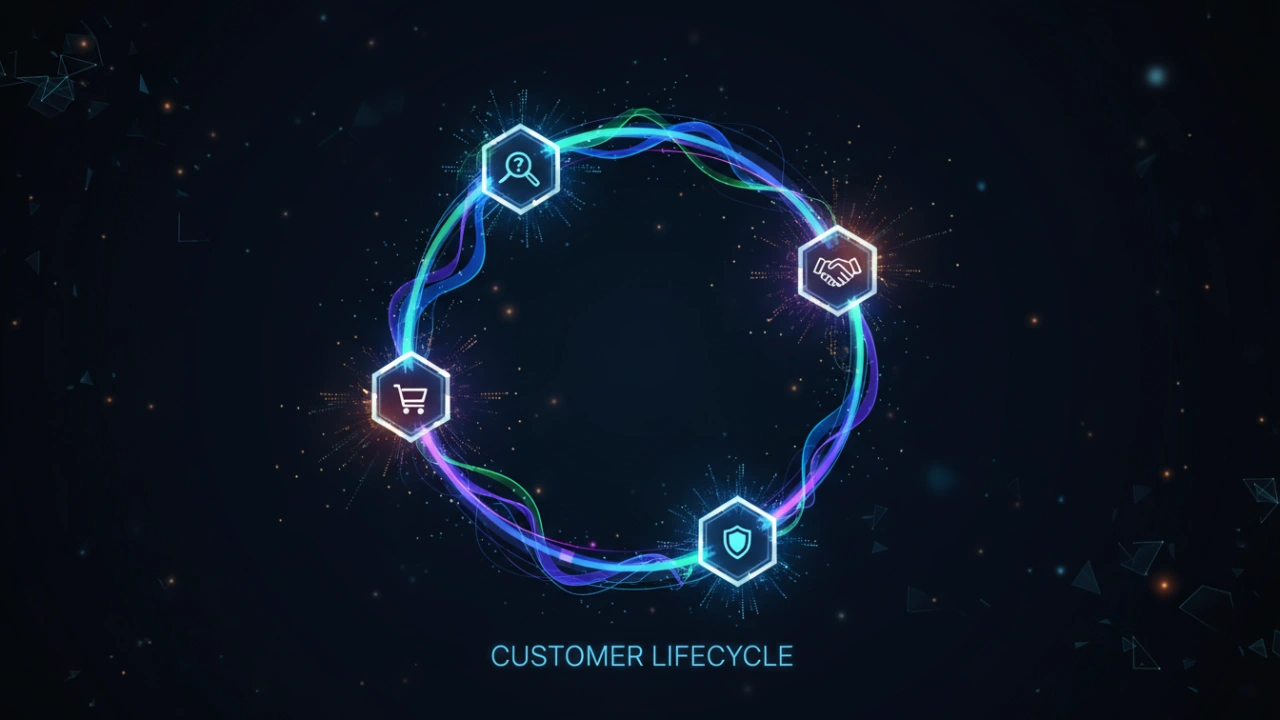

The landscape of customer interaction is undergoing a profound transformation. AI customer experience isn't just for marketing; it's redefining the entire customer lifecycle, from initial discovery to long-term loyalty. Businesses that embrace artificial intelligence are not just optimizing processes; they are building deeper, more meaningful connections with their customers, anticipating needs, and delivering proactive support at scale.
Key Insight
This comprehensive guide will show you how to build a seamless, AI-powered customer experience that drives satisfaction and business growth.
Industry Benchmarks
Data-Driven Insights on Ai Customer Experience
Organizations implementing Ai Customer Experience report significant ROI improvements. Structured approaches reduce operational friction and accelerate time-to-value across all business sizes.
The Strategic Imperative of AI Customer Experience
Modern customers expect instant, personalized, and effortless interactions. Generic, one-size-fits-all approaches no longer suffice. This is where AI customer experience steps in, moving beyond basic automation to create truly intelligent, responsive systems that understand and adapt to individual customer needs.
Forrester reports that companies leading in customer experience grow revenue 1.7 times faster than CX laggards. AI provides the tools to bridge this gap, enabling businesses to deliver exceptional experiences consistently. It's about shifting from reactive problem-solving to proactive value creation, making every interaction feel tailored and empathetic.
Consider the example of Netflix. Their AI-driven recommendation engine doesn't just suggest movies; it learns your viewing habits, preferences, and even the time of day you watch certain genres. This deep understanding translates into a highly personalized content feed that keeps subscribers engaged, directly impacting retention rates and overall satisfaction.
The strategic imperative is clear: AI isn't just a cost-saving tool for CX; it's a revenue driver and a differentiator. It allows you to understand customer sentiment in real-time, predict future behaviors, and automate routine tasks, freeing up human agents for complex, high-value interactions.
Beyond these immediate benefits, AI customer experience fosters a competitive edge. Companies that proactively adopt AI for CX can differentiate themselves by offering superior service, anticipating market shifts, and building stronger brand affinity.
This forward-thinking approach ensures businesses remain relevant and resilient in a rapidly evolving market, attracting and retaining customers who value intelligent, seamless interactions.
Why This Matters
Ai Customer Experience directly impacts efficiency and bottom-line growth. Getting this right separates market leaders from the rest — and that gap is widening every quarter.
Mapping the AI Customer Journey for a Superior AI Customer Experience
An effective AI customer experience strategy considers every stage of the customer journey. From the moment a potential customer first interacts with your brand to their post-purchase support and ongoing loyalty, AI can enhance and streamline interactions, making them more intuitive and satisfying.
This holistic view ensures that AI deployments are not isolated solutions but integrated components of a larger, intelligent ecosystem.
At the discovery phase, AI-powered chatbots on your website can answer initial questions, qualify leads, and guide visitors to relevant products or services. During consideration, AI can personalize product recommendations based on browsing history and similar customer profiles, significantly improving conversion rates.
A study by Accenture found that 75% of consumers are more likely to buy from companies that offer personalized experiences.
Post-purchase, AI continues to play a vital role. Proactive notifications about shipping, delivery, or even product usage tips can reduce anxiety and build trust. For instance, Amazon uses AI to predict potential delivery issues and proactively inform customers, often before they even realize there's a problem.
This type of AI-driven customer experience transforms potential frustrations into moments of delight.
Finally, in the loyalty phase, AI analyzes customer data to predict churn risk, identify upsell or cross-sell opportunities, and personalize loyalty program rewards. This continuous, intelligent engagement fosters long-term relationships and transforms satisfied customers into brand advocates.
The goal is a seamless flow where AI anticipates needs, offering solutions before they become problems.
The AI customer journey is not linear; it's a continuous loop of learning and adaptation. AI systems gather data from every interaction, feeding insights back into the system to refine future engagements. This iterative process allows for constant improvement, ensuring that the AI customer experience evolves alongside customer expectations and business objectives.
Enhancing Customer Service With Artificial Intelligence for Optimal AI Customer Experience
“The organizations that treat Ai Customer Experience as a strategic discipline — not a one-time project — consistently outperform their peers.”
— Industry Analysis, 2026
The application of artificial intelligence in customer service is perhaps the most visible aspect of AI customer experience. It extends far beyond simple chatbots, encompassing virtual assistants, sentiment analysis, intelligent routing, and agent-assist tools that empower human teams.
These AI tools work in concert to create a more efficient, personalized, and satisfying support environment for customers.
AI-powered chatbots and virtual assistants handle a significant volume of routine inquiries, providing instant answers to FAQs 24/7. This frees up human agents to focus on complex, nuanced issues that require empathy and critical thinking. Companies using AI for self-service can see up to a 30% reduction in customer service costs, according to Gartner.
Beyond self-service, AI assists human agents directly. Sentiment analysis tools can gauge a customer's emotional state during a call or chat, alerting agents to potential frustration and allowing them to adjust their approach. Intelligent routing ensures that customers are connected to the most qualified agent for their specific issue, minimizing transfers and resolution times.
Consider KLM Royal Dutch Airlines, which uses AI to manage customer interactions on social media platforms like Messenger. Their AI can understand natural language, answer common questions, and even help customers rebook flights, providing a fast and efficient service experience that scales globally.
This integration of AI ensures consistent, high-quality support across diverse channels.
Need expert guidance on Ai Customer Experience?
Join 500+ businesses already getting results.
Proactive support is another area where AI excels. By analyzing usage patterns and historical data, AI can predict potential issues before they arise, allowing companies to reach out to customers with solutions or preventative measures. This shift from reactive problem-solving to proactive assistance significantly boosts customer satisfaction and reduces the strain on support channels.
Hyper-Personalization at Scale: the Future of AI Customer Experience
The true power of AI customer experience lies in its ability to deliver hyper-personalization at a scale previously unimaginable. This isn't just addressing a customer by name; it's understanding their unique context, preferences, and even their emotional state to deliver precisely what they need, exactly when they need it.
Such tailored interactions build a deeper connection, making customers feel genuinely understood and valued by the brand.
AI achieves this through predictive analytics, analyzing vast datasets to anticipate customer needs and behaviors. This allows for dynamic content delivery, tailored product recommendations, and proactive outreach. For example, Starbucks uses AI to analyze customer purchase history, location, and even weather patterns to send personalized offers through its mobile app, resulting in a reported 3x increase in conversion rates for personalized promotions.
The future of CX with AI involves moving beyond reactive responses to truly proactive engagement. Imagine a scenario where AI detects a potential issue with a customer's product and proactively schedules a service appointment, or offers a relevant accessory before the customer even realizes they need it.
This level of foresight builds incredible loyalty and trust.
This deep personalization requires robust data infrastructure and ethical considerations, but the rewards are substantial. Customers feel understood and valued, leading to higher satisfaction, increased spending, and stronger brand advocacy.
It's about creating a unique journey for every individual, making them feel like the brand truly knows them.
To truly enhance your CX with AI, consider how predictive models can inform every customer touchpoint. From personalized marketing messages to proactive service alerts, AI can craft an experience that feels uniquely designed for each individual. This isn't just about efficiency; it's about building enduring customer relationships.
This level of hyper-personalization transforms the customer relationship from transactional to relational. When customers consistently receive relevant offers, timely support, and experiences tailored to their individual journey, their loyalty deepens.
This fosters brand advocacy, turning satisfied customers into powerful promoters who share their positive AI customer experience with others.
Data, Ethics, and Trust: Building a Responsible AI Customer Experience
While the benefits of AI customer experience are immense, its successful implementation hinges on a strong foundation of data privacy, ethical considerations, and transparency. Customers are increasingly aware of how their data is used, and a breach of trust can quickly erode any gains made through AI-driven personalization.
Building this trust requires a commitment to responsible AI practices from the outset.
Data quality is paramount. AI models are only as good as the data they are trained on. Inaccurate, biased, or incomplete data can lead to poor customer experiences, flawed predictions, and even discriminatory outcomes. Investing in robust data governance and cleansing processes is a non-negotiable first step for any AI initiative.
Ethical AI design requires clear guidelines for how AI systems interact with customers. This includes transparency about when customers are interacting with AI versus a human, ensuring fairness in AI decision-making, and protecting sensitive personal information.
A recent Salesforce study found that 62% of consumers are concerned about how companies use AI, highlighting the need for trust.
Companies must also be transparent about their data collection and usage policies, adhering to regulations like GDPR and CCPA. Providing clear opt-in/opt-out options and explaining the value customers receive in exchange for their data builds confidence.
An example of good practice is clearly labeling chatbot interactions, so customers know they are engaging with an AI, not a human.
Another ethical consideration is AI explainability. Customers, and even internal teams, need to understand how AI systems arrive at their recommendations or decisions. Providing clear explanations for AI-driven actions helps to demystify the technology and reinforce trust, ensuring that the AI customer experience feels transparent and fair.
Overcoming Implementation Challenges and Measuring Success in AI Customer Experience
Implementing a comprehensive AI customer experience strategy isn't without its hurdles. Common challenges include data integration, securing the right talent, and ensuring seamless integration with existing systems. However, with careful planning and a phased approach, these obstacles can be effectively navigated.
One of the biggest challenges is data silos. AI thrives on unified, clean data, yet many organizations have customer data scattered across disparate systems. Investing in a robust Customer Data Platform (CDP) can consolidate this information, providing the single source of truth AI models need.
Without this, even the most sophisticated AI will struggle to deliver accurate insights.
Another hurdle is talent. Building and maintaining AI systems requires specialized skills in data science, machine learning, and AI ethics. Companies often need to upskill existing teams or recruit new talent. For example, a company like Capital One has heavily invested in internal AI training programs to empower its workforce to use and understand AI tools effectively.
Measuring the success of AI in CX requires defining clear Key Performance Indicators (KPIs) beyond just cost savings. Look at metrics like customer satisfaction (CSAT), Net Promoter Score (NPS), first contact resolution rate, average handling time, and customer lifetime value (CLTV).
A pilot project with defined metrics can demonstrate ROI and build internal support for broader AI adoption.
Beyond technical and talent hurdles, effective change management is crucial. Introducing AI into customer-facing operations requires training for human agents, who must learn to collaborate with AI tools rather than view them as replacements.
A well-communicated strategy and ongoing support can help teams embrace AI as an enhancement to their roles, ultimately improving the overall AI customer experience.
Frequently Asked Questions About AI Customer Experience
What is AI customer experience?
AI customer experience refers to the use of artificial intelligence technologies to enhance and personalize every stage of the customer journey. This includes everything from AI-powered chatbots and virtual assistants to predictive analytics for proactive service and hyper-personalized recommendations.
How does AI improve customer satisfaction?
AI improves customer satisfaction by providing faster, more accurate responses, offering personalized interactions, anticipating customer needs, and automating routine tasks. This leads to reduced wait times, more relevant solutions, and an overall feeling of being understood and valued by the brand.
What are the main types of AI used in CX?
Key AI technologies in CX include Natural Language Processing (NLP) for understanding human language, Machine Learning (ML) for predictive analytics and personalization, computer vision for visual search, and Robotic Process Automation (RPA) for automating back-office tasks that support CX.
Can AI replace human customer service agents?
AI is not designed to fully replace human agents but rather to augment their capabilities and handle routine inquiries. AI frees human agents to focus on complex, empathetic, and high-value interactions, creating a more efficient and satisfying experience for both customers and employees.
What are the ethical considerations for AI in CX?
Ethical considerations include data privacy and security, algorithmic bias, transparency about AI interactions, and ensuring fairness in AI-driven decision-making. Businesses must prioritize responsible AI development to build and maintain customer trust.
How do you measure the ROI of AI in CX?
Measuring ROI involves tracking metrics like customer satisfaction (CSAT), Net Promoter Score (NPS), first contact resolution rates, average handling time, customer churn reduction, and increased customer lifetime value. It's crucial to define specific KPIs before implementation.
What's the first step to implementing AI in CX?
The first step is to identify specific customer pain points or business goals that AI can address. Start with a small pilot project, such as automating FAQs with a chatbot, to demonstrate value and gain insights before scaling your AI customer experience initiatives.
What industries benefit most from AI customer experience?
Industries with high customer interaction volumes, complex product catalogs, or a strong need for personalization often benefit most. This includes retail, finance, telecommunications, healthcare, and travel, where AI can significantly improve efficiency and customer engagement.
How does AI handle complex customer issues?
For complex issues, AI often acts as an assistant to human agents. It can quickly retrieve relevant information, analyze customer sentiment, and suggest next best actions. This empowers agents to resolve intricate problems more efficiently and accurately, providing a better AI customer experience overall.
What's the difference between a chatbot and a virtual assistant?
A chatbot typically handles rule-based, specific tasks and answers predefined questions. A virtual assistant, often powered by more advanced AI, can understand more complex natural language, learn from interactions, and perform a wider range of tasks, often across multiple channels, providing a more sophisticated AI customer experience.
Conclusion: Your Path to an Intelligent AI Customer Experience Future
The journey to an intelligent, AI-powered customer experience is no longer a futuristic vision; it's a present-day imperative. By strategically integrating artificial intelligence across the entire customer lifecycle, businesses can move beyond mere automation to create truly personalized, proactive, and efficient interactions that foster deep loyalty and drive sustainable growth.
This strategic shift is essential for any organization aiming to lead in the modern market.
The key lies in a thoughtful, customer-centric approach: understanding where AI can best augment human capabilities, ensuring data quality and ethical practices, and continuously measuring its impact. The brands that master this balance will not only meet customer expectations but consistently exceed them, setting new benchmarks for engagement and satisfaction.
This commitment to intelligent CX ensures long-term success and customer delight.
Ready to transform your customer interactions and stay ahead of the curve? Begin by identifying your most pressing CX challenges and exploring how AI can offer intelligent solutions. The future of customer experience is intelligent, and the time to build it is now.
Enhance your CX with AI and unlock unparalleled opportunities for connection and growth.
Leave a Reply