
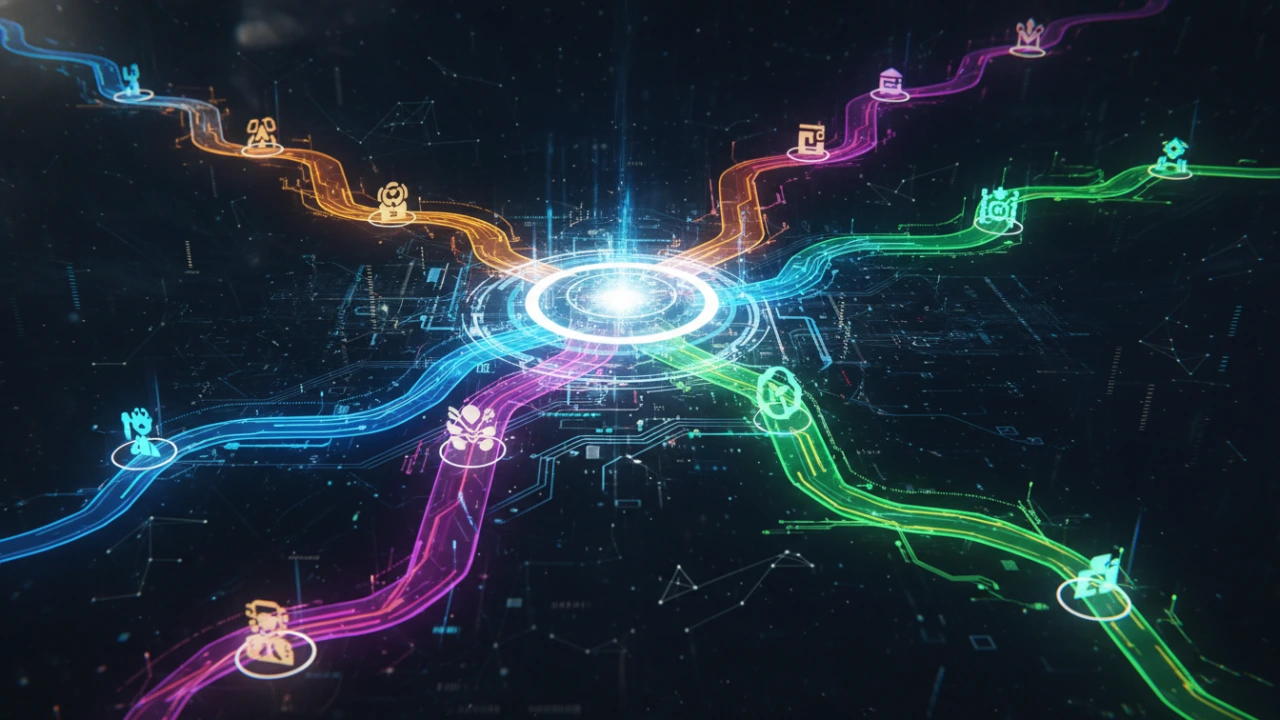

No two customers are the same, so why is your marketing funnel? Learn how to build personalized customer journeys that adapt to individual behaviors, driving deeper engagement and measurable growth. This isn't about segmenting customers into broad categories; it's about understanding and responding to each individual's unique path, preferences, and pain points in real-time. For customer experience managers, marketing strategists, and CMOs, mastering this approach is no longer an advantage—it's a necessity for staying competitive and fostering genuine customer loyalty.
This definitive guide will unpack the strategic imperative behind personalized journeys, explore how AI orchestrates these dynamic experiences, and provide a clear framework for implementation. You'll discover how to move beyond static funnels to create adaptive, relevant interactions across every touchpoint, ultimately transforming customer satisfaction into sustained business success.
Key Insight
Get ready to elevate your customer strategy from generic to genuinely personal and achieve significant business outcomes.
Industry Benchmarks
Data-Driven Insights on Personalized Customer Journeys
Organizations implementing Personalized Customer Journeys report significant ROI improvements. Structured approaches reduce operational friction and accelerate time-to-value across all business sizes.
The Imperative of Personalized Customer Journeys for Modern Engagement
The days of one-size-fits-all marketing are over. Modern consumers expect brands to understand their individual needs, preferences, and context. A generic email blast or a static website experience simply doesn't meet these expectations. Research from Accenture shows that 91% of consumers are more likely to shop with brands that provide offers and recommendations relevant to them.
This isn't just about convenience; it's about building trust and demonstrating that you value their time and attention.
Ignoring this shift comes at a significant cost. Customers who feel misunderstood or bombarded with irrelevant messages quickly disengage, leading to higher churn rates and missed revenue opportunities. Conversely, brands that excel at personalization see significant gains.
For example, Amazon's recommendation engine, a pioneer in personalization, reportedly drives 35% of its sales. This success isn't accidental; it's the result of meticulously crafting experiences that feel uniquely tailored to each shopper, often predicting their next move before they even realize it.
Creating personalized customer journeys means moving beyond basic demographic segmentation. It involves capturing behavioral data—what pages they visit, what products they view, what emails they open, what support tickets they submit—and using that information to dynamically adjust their experience. This adaptive approach ensures that every interaction, from initial awareness to post-purchase support, is relevant, timely, and valuable. It’s about creating a dialogue, not a monologue, with your customers, fostering deeper engagement and loyalty.
Why This Matters
Personalized Customer Journeys directly impacts efficiency and bottom-line growth. Getting this right separates market leaders from the rest — and that gap is widening every quarter.
Personalized Customer Journeys: Deconstructing the Personalized Customer Journey
Understanding the Anatomy of Personalized Customer Journeys
A truly personalized customer journey isn't a linear path; it's a dynamic, branching network of interactions that adapts in real-time based on individual actions and data signals. Unlike traditional funnels that push customers through predefined stages, personalized journeys anticipate needs and offer relevant next steps. Imagine a customer browsing your e-commerce site: instead of seeing a generic homepage, they see products related to their past purchases or recent searches. If they add an item to their cart but don't buy, a personalized email with a complementary product suggestion or a limited-time discount might follow, rather than a generic "don't forget your cart" reminder.
This approach significantly improves customer journey optimization. According to Epsilon, 80% of consumers are more likely to make a purchase when brands offer personalized experiences. This uplift comes from reducing friction, increasing relevance, and making the customer feel understood.
Each stage—awareness, consideration, purchase, retention, and advocacy—is informed by a rich profile of the customer, built from their past interactions, preferences, and explicit feedback. This allows for tailored content, offers, and support that resonate deeply, driving higher conversion rates.
Consider a SaaS company. A new trial user might receive a personalized onboarding email series based on their stated role or industry, highlighting features most relevant to them. If they engage with specific tutorials, the system might then suggest advanced features or integrations pertinent to their usage patterns. This continuous adaptation ensures the customer receives value at every turn, fostering adoption and reducing early churn. It's about guiding, not forcing, them through their unique path to success with truly personalized customer journeys.
Personalized Customer Journeys: AI Customer Journey Orchestration: the Engine of Personalization
“The organizations that treat Personalized Customer Journeys as a strategic discipline — not a one-time project — consistently outperform their peers.”
Need expert guidance on Personalized Customer Journeys?
Join 500+ businesses already getting results.
— Industry Analysis, 2026
The complexity of managing truly personalized experiences for thousands or millions of customers is beyond manual capabilities. This is where AI customer journey orchestration becomes essential. AI acts as the central nervous system, collecting vast amounts of data, analyzing behavioral patterns, predicting future actions, and triggering the most relevant interactions in real-time. It moves beyond simple rule-based automation to intelligent, adaptive decision-making, making personalized customer journeys a reality at scale.
AI-powered platforms continuously monitor customer behavior across all channels—website visits, email opens, app usage, social media interactions, support calls, and even in-store activity. They use machine learning algorithms to identify micro-segments and individual preferences that human analysts might miss.
For instance, a customer who repeatedly views high-end products but never purchases might receive an email about a financing option, while another who frequently buys discounted items might get an alert for an upcoming sale. This level of nuance is only possible with AI-driven personalization.
The impact is clear: a study by McKinsey found that companies applying AI to customer journeys have seen a 10-15% increase in customer satisfaction and a 5-10% reduction in churn. Tools like Salesforce Einstein, Adobe Sensei, or Google Cloud AI's personalization engine exemplify this, dynamically adjusting website content, product recommendations, and communication sequences based on live data streams. They ensure that the right message reaches the right person at the right time, every single time, without manual intervention for each individual, thereby optimizing personalized customer journeys.
Architecting Cross-Channel Personalization
Customers don't interact with brands in silos. They move seamlessly between your website, mobile app, email, social media, and even physical stores. True cross-channel personalization means maintaining a consistent, personalized experience regardless of the touchpoint. The challenge lies in unifying data from disparate systems to create a single, comprehensive view of each customer. Without this unified view, a customer might receive an email offer for a product they just purchased in-store, leading to frustration and a perception of disconnect within their personalized customer journeys.
Building a robust cross-channel strategy requires a fundamental shift towards a customer data platform (CDP). A CDP aggregates data from all sources—online, offline, behavioral, transactional, demographic—into a persistent, unified customer profile.
This "single source of truth" allows your personalization engine to understand the full context of a customer's journey, enabling intelligent decisions across every channel. For example, Starbucks excels at this, where your mobile order, loyalty points, and in-store purchases are all linked to your personalized app experience, creating a cohesive brand interaction.
The cost of inconsistency is high. Research by Aspect Software indicates that 72% of consumers expect agents to know their contact history, regardless of the channel they used previously. When a customer has to repeat information or receives irrelevant communications because different departments aren't sharing data, trust erodes. A well-architected cross-channel personalization strategy ensures that a customer's interaction on your website influences the content of their next email, and their recent support ticket informs the next push notification, creating truly fluid and intelligent personalized customer journeys.
Building Your Personalized Marketing Funnel: a Step-by-Step Guide
Transitioning from a generic funnel to a truly personalized marketing funnel requires a structured approach. It's not an overnight switch but a strategic evolution that focuses on the individual. The core principle is to use data to anticipate needs and adapt your messaging and offers at every stage of the customer lifecycle. Here’s a practical framework to guide your efforts in creating effective personalized customer journeys:
- Define Your Goals & Key Segments: Start by identifying what you want to achieve (e.g., higher conversion, reduced churn, increased LTV). While the ultimate goal is individual personalization, begin by defining your most valuable customer segments (e.g., new visitors, repeat buyers, high-value leads) and their typical journeys. This initial focus helps streamline your efforts.
- Data Collection & Consolidation: This is the bedrock of any successful personalization strategy. Gather data from all available sources: website analytics, CRM, email marketing platforms, social media, customer service interactions, purchase history, and third-party data. Consolidate this information into a unified customer profile, ideally within a Customer Data Platform (CDP), to ensure a complete view.
- Journey Mapping & Personalization Opportunities: Map out the current customer journey for your chosen segments. For each touchpoint, identify where personalization can add value. What information do you have about the customer at that point? How can you use it to make the interaction more relevant? For instance, a B2B company might tailor whitepapers or case studies based on a lead's industry and company size, enhancing their personalized customer journeys.
- Content Strategy for Personalization: Develop a content library that supports dynamic personalization. This means having variations of headlines, images, calls-to-action, and even full content blocks that can be dynamically assembled based on customer profiles and real-time behavior. A study by Instapage found that personalized calls-to-action convert 202% better than generic ones, highlighting the importance of tailored content.
- Implement & Orchestrate: Use an AI-powered customer journey orchestration platform to connect your data, content, and channels. Configure rules and machine learning models to trigger specific personalized actions (e.g., send a personalized email, display a dynamic website banner, offer a specific product recommendation) based on customer behavior. This is where the magic of personalized customer journeys truly comes alive.
- Test, Learn, and Iterate: Personalization is an ongoing process, not a one-time project. A/B test different personalized experiences to see what resonates most effectively. Monitor key metrics (conversion rates, engagement, LTV) and use these insights to continuously refine your journeys. What works for one segment might not work for another, so constant adaptation is key.
By following these steps, you can systematically build a marketing funnel that feels less like a funnel and more like a series of helpful, tailored conversations with each individual customer. This iterative process ensures continuous improvement and adaptation to evolving customer needs, making your personalized customer journeys increasingly effective over time.
Measuring Success and Continuous Optimization for Personalized Journeys
Implementing personalized customer journeys isn't a "set it and forget it" endeavor. To truly succeed, you need a robust framework for measuring performance and a commitment to continuous customer journey optimization. Without clear metrics, you can't assess the impact of your personalization efforts or identify areas for improvement. This iterative process of measurement, analysis, and refinement is what separates good personalization from great personalization, ensuring sustained value.
Key Performance Indicators (KPIs) for personalized journeys often include:
- Conversion Rates: How effectively are personalized experiences driving desired actions (e.g., purchases, sign-ups, demo requests)?
- Customer Lifetime Value (CLTV): Are personalized interactions leading to longer customer relationships and higher overall spending?
- Churn Rate: Is personalization reducing the number of customers who leave your brand?
- Engagement Metrics: Are customers opening more emails, spending more time on your site, or interacting more frequently with your brand across channels?
- Customer Satisfaction (CSAT) / Net Promoter Score (NPS): Are customers happier and more likely to recommend your brand due to personalized experiences?
For example, a company that implemented personalized email subject lines saw a 26% increase in open rates, directly impacting their engagement metrics. Beyond these core KPIs, A/B testing is crucial. Test different personalized messages, offers, or journey paths against control groups to quantify the uplift. Use heatmaps and user behavior analytics to understand how customers interact with dynamic content. Gather direct feedback through surveys to understand their perception of personalization and how it impacts their personalized customer journeys.
The insights gained from these measurements should feed directly back into your strategy. If a particular personalization tactic isn't performing, analyze why. Is the data incomplete? Is the content not relevant enough? Is the timing off? This continuous feedback loop ensures that your personalized customer journeys are always evolving, adapting, and delivering maximum value for both your customers and your business. It's a dynamic process of improvement.
Frequently Asked Questions About Personalized Customer Journeys
What is a personalized customer journey?
A personalized customer journey is an adaptive, data-driven sequence of interactions tailored to an individual customer's unique behaviors, preferences, and context across all touchpoints. It moves beyond broad segmentation to offer highly relevant experiences in real-time, making each interaction feel unique and valuable.
Why are personalized customer journeys important?
They are crucial because modern consumers expect brands to understand and anticipate their needs, leading to increased engagement, higher conversion rates, greater customer loyalty, and ultimately, stronger revenue growth. These journeys build trust and relevance in a competitive market.
How does AI contribute to personalization?
AI customer journey orchestration platforms collect and analyze vast amounts of customer data, identify patterns, predict future behaviors, and dynamically trigger the most relevant content and offers in real-time. This makes true individual personalization scalable and efficient, powering effective personalized customer journeys.
What is cross-channel personalization?
Cross-channel personalization ensures a consistent and tailored customer experience across every touchpoint—web, mobile, email, social, in-store—by unifying all customer data into a single profile. This prevents disjointed or irrelevant interactions, creating seamless personalized customer journeys.
What are the biggest challenges in implementing personalized journeys?
Key challenges include data silos, integrating disparate technologies, creating enough personalized content variations, obtaining accurate customer data, and measuring the ROI effectively. Overcoming these requires strategic planning and robust infrastructure.
What kind of data is needed for personalization?
A comprehensive approach requires behavioral data (website clicks, purchase history), demographic data, psychographic data (interests, values), transactional data, and explicit preferences (survey responses, wish lists). The more data, the richer the personalized customer journeys can be.
How do I start building personalized journeys?
Begin by defining clear goals, consolidating your customer data, mapping out a specific customer segment's journey, identifying key personalization opportunities, and then implementing and testing your approach iteratively. Start small and expand based on results.
What are some key metrics to track?
Important metrics include conversion rates, customer lifetime value (CLTV), churn rate, engagement metrics (e.g., email open rates, time on site), and customer satisfaction scores (CSAT/NPS). These metrics help gauge the success of your personalized customer journeys.
Can small businesses implement personalized journeys?
Yes, even small businesses can start with basic personalization using readily available tools like email marketing platforms with segmentation features or website builders with dynamic content options. Focusing on a few high-impact touchpoints first can yield significant results for personalized customer journeys.
Conclusion: Your Path to Hyper-Relevant Customer Experiences
The shift towards personalized customer journeys is a fundamental evolution in how businesses build relationships and drive growth. By moving beyond generic interactions and embracing data-driven, adaptive experiences, you can meet the heightened expectations of today's consumers and cultivate loyalty that lasts. The core insight is simple: treat every customer as an individual, and they will reward you with their attention, trust, and business.
Implementing personalized journeys requires strategic thinking, robust data infrastructure, and the intelligent application of AI. It's an ongoing commitment to understanding and responding to your customers' unique needs at every turn. The rewards—from increased conversions and higher customer lifetime value to stronger brand advocacy—are substantial and measurable, making the investment in personalized customer journeys highly worthwhile.
Ready to transform your customer interactions from generic to genuinely personal? The first step is often the most critical: understanding your current customer paths and identifying where personalization can make the biggest impact. It's time to map your customer journey and unlock the power of hyper-relevant experiences for your business.
Leave a Reply