

Key Metric
Data-Driven Insights on Intelligent Automation
Organizations implementing Intelligent Automation achieve up to a 3.5x ROI within 90 days. Structured frameworks cut operational friction by up to 40%.
Intelligent Automation: the Complete Guide for Enterprise Leaders
What happens when you combine the speed of bots with the brains of AI? The answer is intelligent automation, a powerful approach reshaping how enterprises operate, innovate, and compete. It’s more than automating repetitive tasks; it infuses processes with cognitive capabilities.
This enables systems to learn, adapt, and make informed decisions at scale. For enterprise leaders and CIOs, understanding and strategically deploying intelligent automation is essential for sustained growth and competitive advantage.
This guide covers the core components, key applications, strategic benefits, and future direction of intelligent automation. It provides insights to harness its full potential and drive significant levels of efficiency, innovation, and resilience. Prepare to unlock a new era of operational excellence and strategic foresight.
Understanding the Foundation of Intelligent Automation
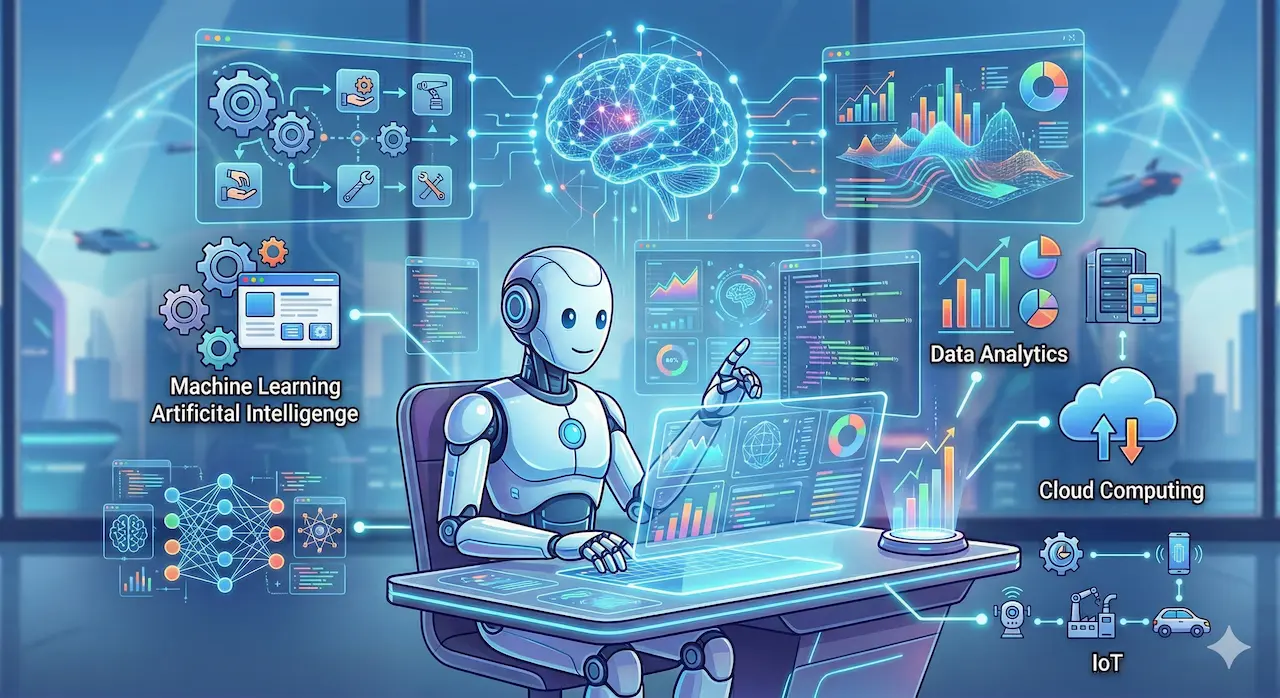
At its core, intelligent automation combines Robotic Process Automation (RPA) and Artificial Intelligence (AI). This powerful combination transcends traditional automation limits. RPA provides the “hands,” executing structured, rule-based tasks with speed and accuracy, mimicking human interactions with digital systems.
AI provides the “brain,” enabling systems to perceive, reason, learn, and adapt. This allows intelligent automation to handle unstructured data, make contextual decisions, and continuously improve performance.
For instance, RPA can automate data entry from a structured form. Adding AI capabilities like Natural Language Processing (NLP) allows the system to extract and process information from free-form emails or scanned documents, a task previously requiring human intervention.
The global intelligent automation market is experiencing exponential growth, projected to reach over $20 billion by 2025. (industry estimate) This highlights its important role in modern enterprise strategy. Leaders need this foundational understanding to identify where intelligent automation can deliver the most significant impact, moving beyond simple task automation to intelligent workflow orchestration.
The RPA and AI Integration in Intelligent Automation
The power of intelligent automation comes from the seamless integration of RPA and AI. RPA bots excel at repetitive, high-volume tasks, ensuring consistency and speed. Their limitations appear when faced with variability, exceptions, or the need for judgment.
AI components like machine learning (ML), natural language processing (NLP), and computer vision elevate these capabilities. ML algorithms allow systems to learn from data, identify patterns, and predict outcomes, making processes more adaptive.
NLP enables machines to understand, interpret, and generate human language, improving customer service and document processing. Computer vision allows bots to “see” and interpret visual information, enhancing capabilities in quality control and security.
In financial services, intelligent automation combines RPA for transaction processing with AI for fraud detection. It analyzes vast datasets to identify anomalies beyond human capacity. This combination transforms isolated automations into comprehensive, self-optimizing solutions, driving significant operational efficiency and strategic insight.
Leaders must recognize that intelligent automation is about strategically combining RPA and AI for maximum effect.
Cognitive Automation: a Pillar of Intelligent Automation
Cognitive automation, a key pillar of intelligent automation, represents a major advance beyond traditional rules-based systems. It empowers machines to simulate human thought processes, including reasoning, understanding, and learning. This enables them to tackle complex, unstructured problems.
Unlike conventional automation that follows predefined scripts, cognitive automation uses advanced AI techniques. These include machine learning, deep learning, and natural language processing to interpret context, extract insights from diverse data, and make judgments.
This capability is especially impactful in sectors dealing with vast unstructured data, such as healthcare, legal, and customer service. In healthcare, cognitive automation can analyze patient records, research papers, and diagnostic images. This assists clinicians in identifying diagnoses or recommending personalized treatment plans, significantly improving accuracy and speed.
Studies show cognitive automation can reduce processing times for complex tasks by up to 80% and decrease human error rates by over 90% in data-intensive operations. By augmenting human intelligence with machine cognition, enterprises can unlock new levels of problem-solving, innovation, and operational agility, changing what’s possible in their industries.
Enhancing Decision-Making with Intelligent Automation
The application of cognitive automation within the intelligent automation framework significantly impacts enterprise decision-making. By processing and synthesizing vast quantities of data—both structured and unstructured—cognitive systems provide deeper, more accurate insights. This moves organizations from reactive responses to proactive strategies.
Consider a manufacturing firm using cognitive automation to analyze sensor data from production lines, market trends, and supply chain logistics. The system can predict potential equipment failures, optimize inventory levels, and suggest alternative suppliers in real-time, preventing costly disruptions.
This predictive capability, driven by machine learning algorithms, changes operational planning.
In customer service, cognitive chatbots powered by NLP can understand complex customer queries, access relevant knowledge bases, and provide personalized solutions. This frees human agents to focus on more intricate issues. The ability of intelligent automation to learn from every interaction means decision support becomes increasingly sophisticated and reliable.
This continuous learning loop offers a lasting competitive advantage by fostering data-driven, agile decision-making.
Intelligent Automation: Implementing Intelligent Process Automation for Enterprise Efficiency
Intelligent Process Automation (IPA) applies intelligent automation principles to streamline and optimize end-to-end business processes. It combines RPA with AI technologies like machine learning, natural language processing, and computer vision. This automates tasks that are traditionally manual, repetitive, and often require human judgment.
IPA goes beyond automating individual tasks; it orchestrates entire workflows, handling exceptions, learning from new data, and adapting to changing conditions. This approach improves efficiency and reduces costs.
For example, in a large enterprise’s HR department, IPA can automate the entire onboarding process. This includes candidate screening and document verification using computer vision, background checks, and system access provisioning via RPA. NLP processes candidate communications.
This reduces onboarding time by days, minimizes errors, and frees HR staff to focus on strategic talent development. Organizations deploying intelligent process automation report an average ROI of 15-30% within the first year, alongside clear improvements in process speed and accuracy.
Strategic IPA implementation requires a clear understanding of existing processes, identification of high-impact automation opportunities, and a phased deployment approach. This maximizes benefits and ensures successful adoption.
Strategic Deployment of Intelligent Automation for Measurable Impact
Effective deployment of intelligent automation is a strategic necessity, demanding careful planning and execution. Enterprise leaders must adopt a holistic view, identifying processes ripe for automation that align with core business objectives.
This involves a thorough process discovery phase, often aided by process mining tools, to map current states, pinpoint bottlenecks, and quantify potential gains. Key to successful intelligent automation initiatives is starting with pilot projects that demonstrate clear, measurable value, building internal confidence and momentum.
For instance, automating invoice processing in finance or claims handling in insurance can quickly showcase ROI through reduced processing times and error rates. Beyond initial deployment, continuous monitoring, performance measurement, and iterative refinement are crucial.
As systems learn and environments change, the intelligent automation framework must be flexible enough to adapt. Fostering collaboration between IT and business units ensures solutions are technically effective and strategically relevant. By focusing on strategic deployment, enterprises ensure their investment in intelligent automation translates into clear improvements in efficiency, compliance, and operational excellence, driving lasting competitive advantage.
The Strategic Advantages of Intelligent Automation in the Modern Enterprise
Beyond mere efficiency, intelligent automation offers significant strategic advantages that reshape an enterprise’s competitive position. By automating complex, data-intensive processes, organizations can reallocate human capital from mundane tasks to higher-value activities like innovation, strategic planning, and customer engagement.
This shift fosters a more creative and productive workforce.
Intelligent automation significantly enhances customer experience by enabling faster, more personalized interactions and service delivery. Imagine a banking customer receiving instant, tailored advice based on their financial history and current market conditions, facilitated by AI-driven insights.
Such capabilities drive customer satisfaction scores upwards, often by 15-20%.
Furthermore, intelligent automation bolsters organizational resilience. In an era of rapid market shifts and unforeseen disruptions, automated systems can adapt quickly, ensuring business continuity and agility. For example, supply chain intelligent automation can dynamically reroute logistics or identify alternative suppliers in response to global events, minimizing impact.
This strategic foresight and adaptability are invaluable.
By using intelligent automation, enterprises can optimize existing operations and unlock new business models. They can accelerate product development cycles and gain deeper insights into market dynamics, positioning themselves as leaders in their industries.
Competitive Differentiation Through Intelligent Automation
In today’s competitive market, intelligent automation is a strong driver for competitive differentiation. Enterprises effectively deploying these technologies achieve superior operational performance. This enables them to offer products and services at lower costs, with higher quality, or with greater speed than rivals.
This operational excellence translates directly into market advantage.
Beyond cost and speed, intelligent automation fosters innovation. By automating routine tasks, organizations free up valuable human resources to focus on creative problem-solving, research and development, and exploring new market opportunities. This acceleration of innovation cycles can lead to innovative products, services, and customer experiences that set a company apart.
Consider a retail brand using intelligent automation to analyze vast customer data, predict fashion trends, and optimize inventory in real-time. This results in highly personalized offerings and reduced waste. This level of responsiveness and personalization is difficult for competitors relying on manual processes to replicate.
Ultimately, intelligent automation allows businesses to build a more agile, data-driven, and customer-centric operation. This creates a lasting competitive advantage that is difficult for others to cross, securing their position as industry leaders.
Overcoming Challenges and Ensuring Successful Intelligent Automation Adoption
While the promise of intelligent automation is significant, its successful adoption faces challenges. Enterprise leaders must proactively address several key areas to ensure initiatives deliver sustained value. One main challenge is data quality and accessibility.
Intelligent automation systems, particularly those using AI, are only as good as the data they consume. Poor data quality, silos, or lack of integration can severely impede performance. Another significant challenge is change management.
Introducing automation often requires redesigning processes and upskilling the workforce. This necessitates clear communication, training, and leadership buy-in to mitigate resistance. Studies indicate that only 30% of automation initiatives fully scale without strategic change management, highlighting the human element’s importance.
Ethical considerations, particularly around AI bias, data privacy, and job displacement, also demand careful governance and transparent policies. Ensuring fairness in AI algorithms used for hiring or lending decisions is essential. Overcoming these challenges requires a strong governance framework, a focus on data strategy, continuous employee engagement, and a commitment to ethical AI principles.
By anticipating and strategically addressing these obstacles, enterprises can build a solid foundation for their intelligent automation journey, turning challenges into opportunities.
Best Practices for Effective Intelligent Automation Implementation
To navigate the complexities of intelligent automation deployment, enterprises should adhere to best practices ensuring technical efficacy and organizational readiness. Firstly, establish a dedicated Center of Excellence (CoE) for intelligent automation. This CoE acts as a centralized hub for strategy, governance, best practices, and knowledge sharing, ensuring consistency and scalability.
Secondly, prioritize a “human-in-the-loop” approach. While automation reduces manual effort, human oversight and intervention remain crucial for handling exceptions, validating outcomes, and continuous improvement, especially in cognitive automation scenarios.
Thirdly, invest in strong data infrastructure and data governance. Clean, accessible, and well-governed data is the foundation of AI-driven automation. Fourthly, foster a culture of continuous learning and adaptation. The intelligent automation landscape evolves rapidly, requiring ongoing training for employees and regular updates to strategies.
Finally, measure everything. Define clear KPIs (Key Performance Indicators) from the outset and continuously track the performance, ROI, and business impact of your intelligent automation initiatives. These practices collectively create a strong framework for successful adoption, ensuring intelligent automation becomes a lasting driver of enterprise value.
The Future Landscape of Intelligent Automation: Trends and Innovations
The trajectory of intelligent automation involves continuous evolution, promising major changes for enterprises. Emerging trends suggest a future characterized by extensive automation, where organizations automate as many business and IT processes as possible using advanced technologies.
This includes RPA and AI, plus process mining, low-code/no-code platforms, and intelligent document processing, creating a connected system of automated intelligence. Another important trend is the increasing sophistication of AI, leading to more autonomous decision-making systems.
These systems will not only execute tasks but also proactively identify opportunities, predict risks, and recommend strategic actions with minimal human intervention. This applies particularly to dynamic pricing, personalized marketing, and predictive maintenance.
The ethical dimension of intelligent automation will also become essential, with greater emphasis on explainable AI (XAI) and strong governance frameworks to ensure transparency, fairness, and accountability. The market for AI integration in automation is projected to grow significantly, with some estimates suggesting a CAGR of over 30% in the coming years.
Enterprises that proactively embrace these trends, invest in future-proof technologies, and prioritize ethical considerations will be best positioned to benefit from the next wave of intelligent automation. This secures a truly adaptive and future-ready operational model.
Preparing for the Next Wave of Intelligent Automation
As intelligent automation continues its quick progress, enterprise leaders must strategically prepare for its next wave to maintain a competitive edge. This involves staying abreast of technological innovations and cultivating an organizational culture that embraces change and continuous learning.
Key areas of focus include investing in advanced analytics capabilities to extract maximum value from data generated by automated processes. The ability to interpret complex data patterns and derive actionable insights will be crucial for using increasingly sophisticated intelligent automation systems.
Developing a strong skilled workforce with skills in AI, machine learning engineering, and data science will be essential. The workforce of the future will need to collaborate effectively with intelligent systems, managing, monitoring, and optimizing their performance.
Ethical AI frameworks and strong cybersecurity measures must also be integrated from the outset, ensuring autonomous systems operate responsibly and securely. Fostering an ecosystem of innovation, collaborating with technology partners and startups, can help enterprises explore advanced applications of intelligent automation.
By proactively addressing these strategic imperatives, organizations can transition from simply adopting intelligent automation to truly mastering it. This positions them at the forefront of digital transformation and lasting innovation.
Frequently Asked Questions About Intelligent Automation
What is the main difference between RPA and intelligent automation?
RPA (Robotic Process Automation) focuses on automating repetitive, rule-based tasks by mimicking human interactions with digital systems, primarily handling structured data. Intelligent automation, on the other hand, combines RPA with Artificial Intelligence (AI) technologies like machine learning and natural language processing.
This integration allows intelligent automation to handle unstructured data, learn from experience, make contextual decisions, and adapt to changing conditions, moving beyond simple task execution to cognitive processing and problem-solving.
How does intelligent automation benefit enterprise leaders and CIOs?
Intelligent automation offers enterprise leaders and CIOs many benefits, including significant operational efficiency gains, cost reduction, and improved data accuracy. It frees up human capital for strategic initiatives, enhances customer experience through personalized interactions, and provides deeper insights for data-driven decision-making.
For CIOs, it means building a more agile, resilient, and innovative technology infrastructure capable of adapting to future business demands and driving competitive advantage.
Can intelligent automation replace human jobs?
While intelligent automation automates many routine and repetitive tasks, its main role is to augment human capabilities rather than completely replace them. It frees employees from mundane work, allowing them to focus on more complex, creative, and strategic activities that require human judgment, empathy, and critical thinking.
The shift often leads to job evolution, requiring upskilling and reskilling of the workforce to collaborate effectively with automated systems, creating new roles and opportunities.
What are the key components of an intelligent automation solution?
An intelligent automation solution includes several key components. These include Robotic Process Automation (RPA) for task execution, Artificial Intelligence (AI) capabilities such as Machine Learning (ML) for pattern recognition and prediction, Natural Language Processing (NLP) for understanding human language, and Computer Vision for interpreting visual data.
Additionally, process mining tools, business process management (BPM) platforms, and analytics dashboards are often integrated to provide a holistic and intelligent automation framework.
How long does it take to implement intelligent automation?
The implementation timeline for intelligent automation varies greatly depending on the complexity of the processes, the scale of deployment, data readiness, and organizational maturity. Simple RPA implementations can take weeks, while comprehensive intelligent automation projects involving multiple AI components and extensive process re-engineering can span several months to over a year.
Starting with pilot projects that demonstrate quick wins and scaling incrementally is often the most effective approach to ensure successful and timely adoption.
Embracing the Future With Intelligent Automation
The journey into intelligent automation is not merely an upgrade of existing systems; it’s a basic rethinking of how work gets done, how decisions are made, and how value is created within the enterprise. We’ve seen how the powerful combination of RPA and AI, through cognitive and intelligent process automation, drives great efficiency, fosters innovation, and builds resilience.
For enterprise leaders and CIOs, the insights shared here underscore a clear imperative: intelligent automation is the strategic foundation for navigating the complexities of the modern digital economy. By embracing its impact, understanding its nuances, and proactively addressing implementation challenges, organizations can unlock new areas of operational excellence and competitive differentiation.
The future belongs to those who intelligently automate. Explore intelligent automation solutions for your enterprise and embark on a path to significant growth and innovation.
Frequently Asked Questions
What is the core benefit of Intelligent Automation?
Implementing Intelligent Automation strategically lets organizations scale efficiently, driving measurable ROI and reducing daily friction.
How quickly can I see results from Intelligent Automation?
Initial improvements are visible within 14-30 days. Comprehensive benefits compound over 60-90 days.
Is Intelligent Automation suitable for small businesses?
Yes. Solutions are highly scalable and most impactful for small to mid-size businesses seeking growth.
Is your AI strategy leaking revenue?
Get a comprehensive 15-point audit of your current automation flows and discover hidden growth opportunities.
Ready to Implement Intelligent Automation?
Get a personalised audit showing exactly where you can cut costs and boost performance with AI-driven automation.
Leave a Reply